By Sammy Gubbihal and Jazlynn Ward
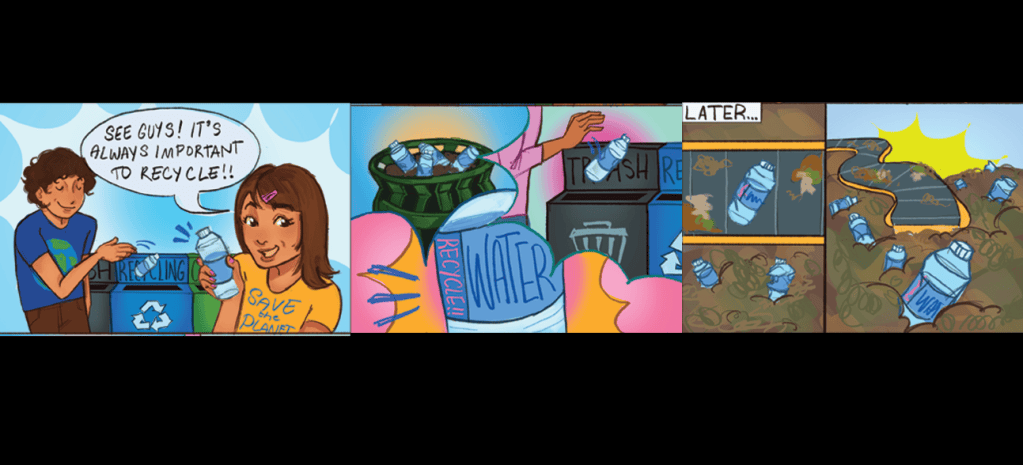
Beneath layers of plastic bottles, takeout containers and grocery bags, mountains of trash continue to grow. We toss our waste into recycling bins hoping it becomes something new, but some of it still ends up in landfills. Maybe the real question isn’t how we recycle, it’s why we produce so much waste in the first place.
“I think that recycling on campus is important, but it is limited to a group of people who are more educated about the process than us,” junior Faith Dansby said. “Only people who know what recycling does actually use it properly.”
CalRecycle reported that California recycled or diverted approximately 42% of its waste in 2024, although this measurement includes activities beyond simply placing materials in recycle bins. Consumer consumption and the increasing waste only makes change more and more difficult to be implemented.
When the recyclables are picked up, they are screened for contamination, or eligibility to be recycled. If they are unrecyclable materials, they are sent to the landfill. According to the San Fernando Sun, in Los Angeles, this is about 20-40% of everything we put in the recycling bin.
“Recycling is a toxic lie pushed by the plastics industry,” said John Hocevar, the campaign director of Greenpeace’s USA Oceans, to Greenpeace media. “These corporations and their patterns continue to sell this comforting lie to hide the hard truth, we simply have to stop producing plastics.”
The problem that created the Trojan horse of recycling is systemic; although those in power do not do anything to help the problem, we are being misled that it is a good solution for the waste problem. We can not adopt solutions that do not challenge the existing structures that don’t help us.
Despite recycling’s limited impact, however, it is disingenuous to call it completely useless. According to the Environmental Protection Agency, recycling provides nine times more jobs than normal waste management. More importantly, it gets people to care about their environment instead of treating it like a future hurdle.
Just look at our campus, recycling bins have made environmental responsibility more visible and given students an easy way to make more sustainable choices. When we throw that plastic spork into the bin, we feel satisfaction that we helped the environment. But that’s where it ends. How many of us spare another thought for the environment as we continue our day drinking from yet another plastic bottle.
There needs to be a more concentrated movement to illustrate that we need to stop emphasizing recycling, and prioritize reducing and reusing.
“Reduce first,” AP Environmental Science teacher Erica Cochran said. “I think we have to broaden our scope of education in terms of reusing and repurposing and making better choices than to recycle. We need to get away from consumerism.”
Reducing and reusing also require us to look beyond the recycling bin. Instead of asking students only to dispose of their waste correctly, GHC could examine how much waste the school produces in the first place.
Our cafeteria can move away from wrapping our meals in so much plastic, and instead use biodegradable paper. Single-use plastic bottles could be replaced with reusable or refillable options. Larger, clearly labeled recycling bins could make proper disposal easier while also reducing confusion about what belongs where.
Most importantly, students should be taught that sustainability does not begin when we throw something away. It begins when we decide whether we need it all.
“If everyone did their part, we wouldn’t have as much of a discussion on [carbon] footprint as we are having,” Administrative Director of Operations of both GHC campuses Norm Holloway said. He overlooks the school’s waste management, amongst other teams, and when he sees the campus littered with trash, he asks why.
“The advent of these disposables were meant to reduce some work on one end, and the scale is tipped in another way. There needs to be balance,” Holloway said.