This year, practical effects usurped CGI. This summer’s movie-run seems to prove as much, with films like “The Odyssey” and “Backrooms” that mainly used practical effects stealing the spotlight from “box-office flops” like “Supergirl” and “The Mandalorian and Grogu” that relied on CGI.
Christopher Nolan’s “The Odyssey,” released on July 17, quickly became one of the most popular films of the year, reaching $124.5 million in its opening weekend.
The difference, perhaps, is his approach to effects. One of the appeals of his newest film is the use of mainly practical effects to create the historical and mythological aspects of “The Odyssey.” But what are practical effects, anyway?
Practical effects are things like physical sets, special effects makeup, animatronics, prosthetics, and more. On the other hand, there’s CGI, or computer generated imagery, which can create scenes that are near impossible for humans to make–and with just a computer program.
During the creation of “The Odyssey,” the director insisted on practical sets, effects, and real filming locations, despite the challenges that it raised for himself and his crew.
“Issues like this have led to a decline in quality of work,” aspiring filmmaker and senior Zachary Prasad said. “Worsening conditions like overworking have forced the overall quality of effects to decrease, not to the fault of the artists, but the industry and its executives.”
But as of late, it seems that new filmmakers are moving more towards practical effects rather than its cheaper cousin. Films such as “Obsession” (2026) and “Backrooms” (2026) have proved just as much. The response has been overwhelmingly positive– “Obsession” grossed over $501.5 million, and “Backrooms” made $395 million
The storytelling and cinematography of these two films have captured the attention of the youth, while big Hollywood productions struggle to bring in crowds. So why are younger audiences starting to move away from CGI?
There are many reasons, but one answer appears to be CGI fatigue. CGI has become overused in recent years. Fans want something new, more tangible. That’s why directors have started moving towards practical effects, rather than relying on the more effective (yet emotionless) technology.
“Movie franchises such as Marvel or DC have always relied on CGI, and it hasn’t been much of a problem,” senior and aspiring actress Sofia Olivar said. “However, right after ‘Avengers: Endgame,’ that’s where people have started to feel the ‘Superhero fatigue’ a lot more. The writing has become mediocre and the use of CGI has gotten out of hand.”
“I have made short films, so I really enjoy having it be real,” senior and filmmaker Meloni Vardeh said. “I think we should try to focus on the plot of the movie, the scripts, the actors, instead of focusing on how much stuff is going on at once.”
But it’s not just an overuse of CGI that moviegoers are rejecting– it’s the integration of AI. In June 2026, the film studio A24, which is known for its support for small indie filmmakers, announced a deal with Google to “create an artificial intelligence research partnership,” according to the online newspaper The Independent. The partnership has gained lots of attention online, with fans and filmmakers alike voicing their disdain.
“The outrage was incredibly heart-warming to see online at such an invasion of the creative medium of filmmaking,” Prasad said. “Telling stories is a uniquely human skill, and we will protect it forever, using more practical effects in this new era of creation.”
Not everyone shares Prasad’s sentiment. Earlier this year, an exclusively AI-generated film, “Hell Grind,” premiered at the Marché du Film in Cannes. It only took two weeks to make and cost just $500,000, according to WSJ.
For a generation that has mainly grown up surrounded by technology, the rebuking of AI and even tools like CGI initially feels confusing. Nevertheless, this reaction reveals the truth about the youth and young creatives, in particular. They want originality and authenticity, not recycled ideas and “AI slop.”
Filmmakers like Nolan, Barker, and Parsons are bringing back detail and care to Hollywood, which audiences greet with open arms. The box office numbers are proof of that.
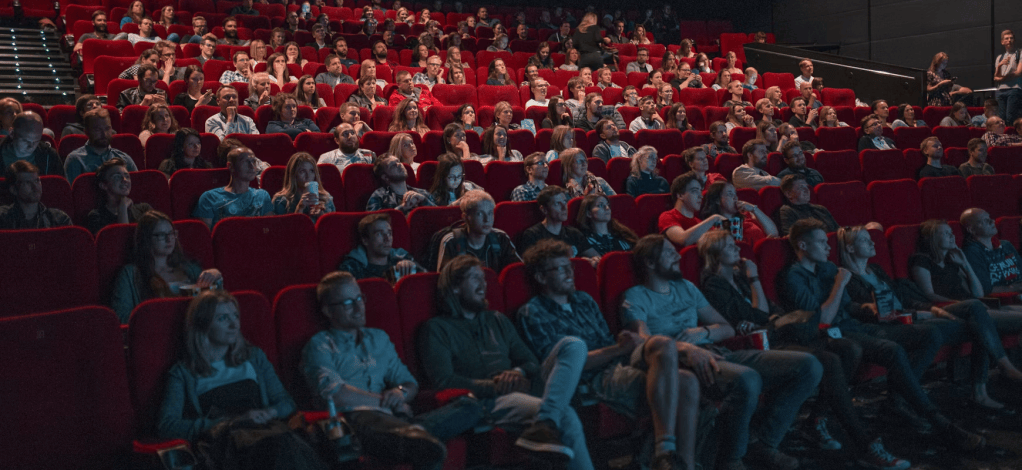
Films returning to practical effects, away from CGI
This year, practical effects usurped CGI. This summer’s movie-run seems to prove as much, with films like “The Odyssey” and “Backrooms” that mainly used practical effects stealing the spotlight from “box-office flops” like “Supergirl” and “The Mandalorian and Grogu” that relied on CGI.Christopher Nolan’s “The Odyssey,” released on July 17, quickly became one of the…