By Arianna Avitia-Gutierrez
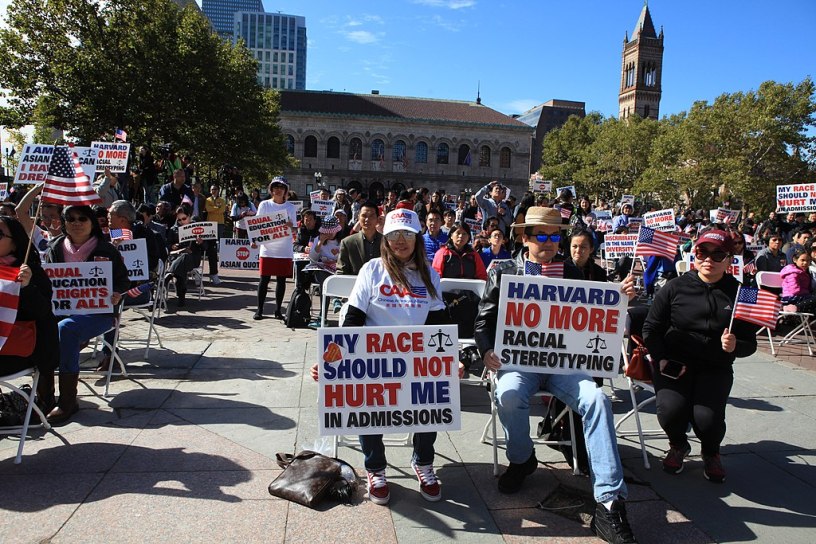
On June 29, the Supreme Court effectively banned Affirmative Action as an aspect of the college admissions process. Going against almost 50 years of legal precedents, this ruling came as a result of cases Students for Fair Admissions (SFFA) v. Harvard and SFFA v. University of North Carolina (UNC). The U.S. will now take on a new policy of race-blind admissions, in which race is not considered in the college admissions process.
Affirmative Action was created in 1965. Its purpose was to eliminate discrimination against minority groups in professional and educational settings, which historically favored whites and males.
The SFFA group filed separate cases against Harvard and UNC, arguing that Affirmative Action violated Title VI of the Civil Rights Act of 1964 and the Equal Protection Clause of the 14th Amendment. The case was originally filed in November of 2014 and represented a group of anonymous Asian-American students who were rejected from Harvard and UNC. The students all felt that racial discrimination played a part in their rejections.
In the end, the Supreme Court ruled that race-based admissions processes did violate the Equal Protection Clause in a 6-3 vote in the case of UNC and a 6-2 vote in the case of Harvard.
“The student must be treated based on his or her experiences as an individual — not on the basis of race,” Chief Justice John Roberts wrote.
This decision to nationally ban Affirmative Action came 27 years after the decision to ban it in California’s public universities. The policy was put to a halt in California in 1995, sparking nationwide controversy. It came as a result of white applicant Allen Bakke claiming that he faced reverse discrimination by being rejected from UC Davis medical school. His case became a landmark Supreme Court ruling.
Now that Affirmative Action is banned, many worry that colleges will no longer be as diverse and attainable for people of color. Some argue that with the decision to end Affirmative Action, other processes like legacy admissions should be called into question as well. This follows the logic that it is also unfair for students to be favored in the admissions process for having familial connections to an institution. Others agree with the Supreme Court’s decision and believe that Affirmative Action did negatively impact Asian-Americans in the college admissions process.
Regardless, the decision to dismantle Affirmative Action has left some uncertain of the future. The class of 2024 will be the first graduating class in almost 50 years to apply to college without the policy. Many seniors wonder how this decision will impact the admissions process, fearful it has lowered their chances of being accepted into prestigious institutions. Many are also outraged by the decision itself.
“In a day and age where we are so aware of systemic racism, it’s naive to say we’re not going to consider race,” senior Aayushi Garg said.
In light of the confusion and shock tied to the Supreme Court’s decision, Granada Hills Charter (GHC) is taking steps to relieve the stress that seniors may be feeling about their applications.
“It’s completely understandable that students may have concerns about how the decision to end Affirmative Action could impact their college acceptance chances,” Administrative Director of Counseling Gina Corpus said. “It’s easy to get caught up in factors beyond your control, but it’s important to focus on what you can control such as your dedication to your education, your commitment to personal growth, and the effort you put into your application. If you’re feeling uncertain or overwhelmed, don’t hesitate to reach out to your counselor.”
The College Office will continue to offer workshops and college visits to support students during the long admissions process. There, seniors can hear directly from college representatives and learn about what colleges are doing in response to the Supreme Court ruling.
 The Plaid Press