By Abigail Kim
For many, the topic of menstruation can be difficult to address in public. Throughout history, women have been dissuaded from discussing or even acknowledging menstruation, as they consider it to be impure and a “curse.”
For example, in the past, many religions had strict laws surrounding menstruation. In Christianity, women were prevented from receiving communion or entering the church during their menstruation cycle. Judaism expected menstruators to engage in Niddath (ritually unclean), in which they immersed themselves in a ritual bath every day throughout the timespan of their period. The ritual bath was used to “cleanse” or purify the menstruator. Similarly, women who practice Islam had to complete a ritual washing in order to become “clean” again. Only then could they continue to fast, pray, and be allowed to enter the mosque.
Everything regarding a woman’s body and sexuality was kept strictly hidden from society, not only creating the stigma surrounding menstruation today but also preventing them from being informed about the subject.
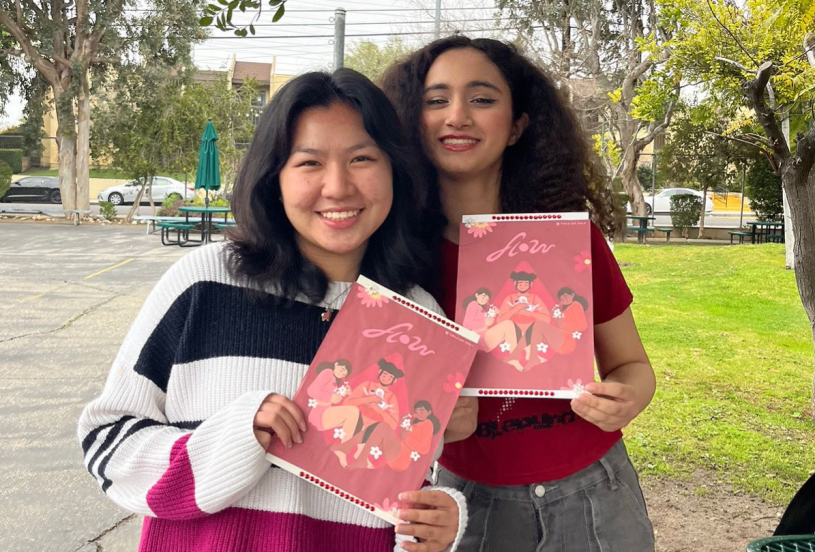
Flowsies is an International Baccalaureate (IB) Creativity, Activity, Service (CAS) project, founded by seniors Emily Pho and Kayla Delijani. They created it in order to combat this stigma surrounding menstruation, as well as guide menstruators through their menstruation journeys.
Both Pho and Delijani have had unique experiences when it came to menstruation. Over time, they began to realize that menstruation, despite its significant impact on the female body, wasn’t discussed as much as it should have been. Many girls, including themselves, were forced to enter the world of menstruation, knowing little to nothing about how to properly handle menstruation, much less what it even was. They made it their mission to destigmatize menstruation and encourage menstruators to be confident in their periods.
“I’ve always been really passionate about menstrual education,” Pho said. “When I was in elementary school, I got my first period a lot earlier than my peers. I remember feeling really disoriented and self-conscious because nobody around me ever talked about PMS symptoms, menstrual hygiene tips, and period product options. By the time the fifth-grade ‘puberty assembly’ happened, I already knew all of the information from experience. I wished that I had more education and support earlier so that my younger self wouldn’t have to endure so much trial and error. That’s why I made it my personal goal to teach my younger sister, cousins, and friends how to navigate life with periods–to give them the help they deserve.”
No one seems to want to talk about menstruation. It may be past societal values and beliefs that are making us hesitant or embarrassed to confront the topic of menstruation, but that shouldn’t stop us from learning about it in our everyday lives. The education system fails to teach many girls about their bodies and the importance of menstruating, leaving them helpless when they actually do get their periods.
“Many people avoided talking about menstruation and female hygiene as a whole,” Delijani said. “My health teacher who had covered sexual education in middle school lightly touched upon it. My mother gave me brief guidelines. But besides that, it was treated as an embarrassment that needed to be brushed under the rug. Why was it that periods were excluded from this [discussion] when they were such a monumental part of becoming a woman?”
In order to combat the stigma surrounding menstruation, Flowsies hosts its own events at local libraries with activities, such as period pouch decorating, absorbency experiments, trivia games, discussion circles, and question-and-answer sessions. Their target audience is children ages 8-16, but all menstruators are welcome as well.
“We have already hosted six sessions, each following a routine my partner [Emily] and I came up with that would cover teaching points we wanted to touch upon,” said Delijani. “These include the basics: how to utilize many different period products (disposable pads, cloth pads, tampons, menstrual cups), the advantages and disadvantages of multiple period products, common misconceptions, facts about the female anatomy (uterus specifically), how to stay healthy throughout a menstrual cycle (beneficial diets, avoiding health risks), ways to alleviate period pains, and much more.”
By informing menstruators about what menstruation truly is, they can be better equipped when it comes to handling their own menstruation journey. Flowsies has opened up so many opportunities for menstruators to come together and talk about their own experiences, knowing that they are in a space where they are understood.
“It makes me so proud knowing that we opened up a supportive, judgment-free space for teens to ask questions about periods,” said Pho. “How often do you get the chance to ask ‘Can you pee with a tampon in?’ It reminded me of why I started this project in the first place. Many of the older guests told me after our events that we introduced them to things they’d never seen before, like menstrual cups and cloth pads. It was so fun seeing their reactions to different period products, especially the expanded tampons in our absorbency experiment. It really shows that even after years of experience, there’s always more you can learn!”
Aside from the in-person events, FLOWSIES is also attempting to expand its outreach to reach more people and raise more awareness.
“We are currently holding a period product donation drive to collect menstrual products for those in need at local women’s/children’s centers,” said Pho. “The donations from this drive will be coupled with the remaining period products from our library events and pouches packed by volunteers.”
Recently, they partnered with “The Pad Project,” which provided them with $500 worth of menstrual products: twenty-four boxes of 36 pads, twenty-four boxes of 36 tampons, and sixteen boxes of 54 pantyliners.
“Menstruators feel empowered when they are together in a room filled with people who understand them,” said Pho. “When I allow myself to be vulnerable with these people and share a personal story, it eases the tension in the room. It also encourages the guests to start sharing their own experiences. It proves that you can destigmatize periods, one conversation at a time. Simply talking about periods reduces the shame and embarrassment that menstruators often feel.”
Obviously, it’ll take a long time to break down the walls that society has built around the topic of menstruation. But FLOWSIES is taking the necessary first steps in order to combat this, and over time, these efforts will allow menstruators to feel comfortable and knowledgeable about their menstruation journeys.
“I wanted for those we were able to reach to never stray away from becoming involved with who they are, such as asking questions about their period, even if it was the nitty-gritty Fdetails,” said Delijani. “I wanted people to be able to congregate under the shared pride and appreciation of womanhood because being a woman is something to be proud of.”
 The Plaid Press