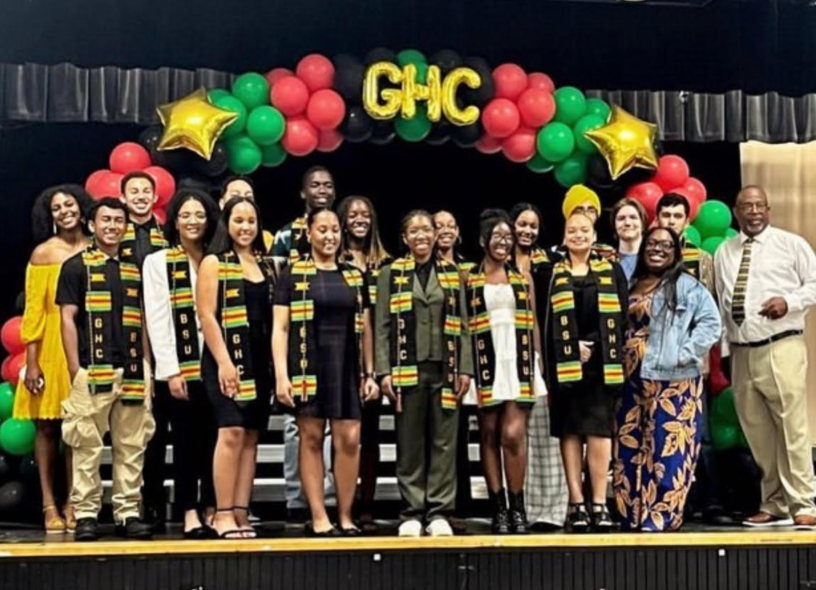
Since we make up such a small percentage of the school population, we must ensure our voices are heard and represented.
Jordan Clark
By Natalie Hanna & Karma Paez
Black Student Union (BSU) is a club that is all about encouraging inclusivity, promoting awareness, and creating a safe space for meaningful connections. During their weekly meetings, students are encouraged to speak about their experiences, but can also take the time to relate with their peers.
Only 4.2 percent of Granada Hills Charter (GHC) students are African American. Since there is such a small population, some students feel less supported and valued. To counteract this, BSU’s main mission is to create an open space for those students to feel less alone.
One of the ways BSU works to support the African-American community on campus is through spreading awareness of racism. Students all across campus use racial slurs, racial microaggressions, and other insensitive comments despite our educated and diverse campus.
“I struggled a lot with [my] identity especially because in a lot of the higher classes, you don’t tend to see a lot of African American people which can be very discouraging,” senior Amaya Mazone said. “I feel that people are insensitive about their comments and certain manners like how you wear your hair, or how you’re dressing, or the way you talk, and there’s a lot of stigma against that.”
BSU meetings have focus groups where members share their experiences with racism at GHC. The focus groups are a safe space where students are meant to feel valued and respected. Sharing experiences of racism can help members of BSU feel a sense of solidarity, helping them feel less isolated and more supported to fight racism.
In these groups, special education teacher and BSU adviser Jordan Clark asks students individualized questions to which the students respond by sharing their experiences. Members are also able to offer their peers support and encouragement.
“Focus group discussions are a time when students can come and share their experiences of being a Black student on campus,” Clark said. “We talk about the positive practices that teachers do during class time to engage students, in hopes we can make those teaching strategies more universal. We also talk about ways students feel they can be better supported in the classroom.”
Junior Rachel Rogers, president of BSU, is attempting to expand the club and its principles as much as possible this year. Her goal is to start engagement, outreach, and fundraising committees to get students more involved. The outreach committee’s main purpose is to attract attention from the administration to make African American history a more prominent focus in GHC’s school culture and curriculum.
This year’s BSU officers plan to do more volunteering, fundraising, and field trips to make the club more interactive and engaging for its members. The officers’ aim is to have field trips to historically Black colleges and universities, other college tours, and create non-profit organizations to encourage people to help the community, more specifically, the Black community.
“We try to make it as inclusive as possible,” Rogers said. “We’re trying to do a lot more in terms of volunteering, field trips, things to get people interactive with. Just let them be seen, let them be heard. Everyone should be able to hear their voice because they might have a lot to say.”
BSU is trying to bring a safe environment to GHC where students can be vulnerable about issues they have faced and seek advice if needed. Through their focus groups, committees, and fundraising, the club hopes to spread awareness about racism and knowledge of Black culture. BSU’s doors are open to all, providing a welcoming place to those who want to be more supportive and active in their community.
 The Plaid Press