By Mia Mendez & Stephanie Tran
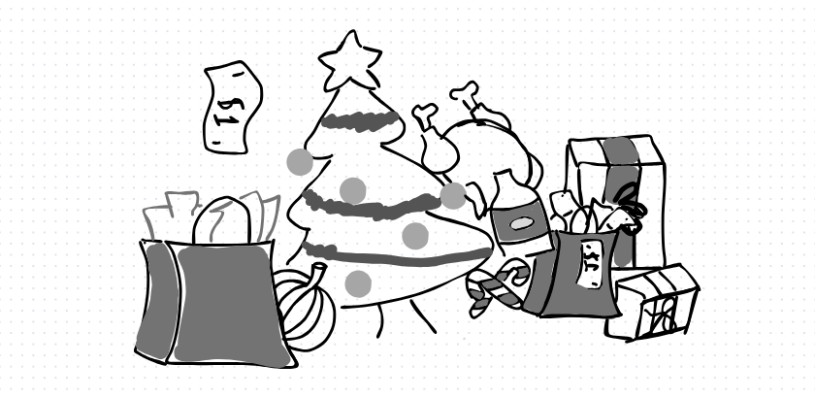
As the holiday season approaches, a disturbing trend often emerges: the surge in holiday consumerism. Driven by the desire to make their houses the prettiest on the block, people buy more and more decorations. Seeking to demonstrate affection causes people to buy more and more lavish gifts for friends, family, and significant others.
The big bright lights and colors filling sparking advertisements for the best deals of the season trick customers into believing there’s an urgency to buy, buy, buy before the sale ends.
This leads to a consumerism spiral that seems uncontrollable during the holiday season.
According to Numerator, a consumer insight data company, around 70 percent of people spend hundreds of dollars on decor, food, and gifts during the Christmas season.
Although decorating, hosting dinners, and buying gifts can be meaningful ways to spend time during the holidays, often they are not the most effective way to commemorate the season. Besides, not everyone can afford to splurge.
People tend to shower their family members with gifts, going for quantity over quality. Often, many of these gifts are left stuffed into a corner and forgotten.
The younger generation, especially, tends to spend money due to the influence of social media. Many fear feeling left out if they don’t follow the latest TikTok trends whether that includes candy, clothing, skincare products, or something else. For example, during Halloween, TikTok convinced people they needed to create “boo baskets” for significant others.
Big corporations are the ones that gain the profit from consumerism rather than loved ones. They’re certainly not going to stop pressing people with tons of deals and advertisements.
Most items that are purchased during the holidays are meant for the joy of celebrating; however, they are not necessities.
“I think that holiday consumerism is a problem because people buy too much stuff and there isn’t even a proportional amount of enjoyment for the person receiving the present,” senior Olivia Fernandez said.
Even if we do enjoy the extra gifts, there are many environmental factors that most people fail to consider. There are more natural resources wasted during the holidays, the product of which often ends up in the trash. According to the Center for Biological Diversity, “the amount of household waste in the United States in the month of December is 23 percent higher than in other months of the year.”
Think about all the gift bags, tissue paper, and plastic toys that simply end up in landfills.
Instead of a day to connect and enjoy the holidays with family and friends, the festivity has become more materialistic over the years.
People stress about what to get the other person when presents could be handmade and personalized. Parents worry about checking their bank accounts to make sure they have enough money for gifts when many kids just want quality time.
However, it is important to remember that the holidays were created as a time to cherish memories and have fun, not to be overshadowed by financial concerns. Instead of falling prey to the consumption-driven narrative, shifting towards a more mindful lifestyle will allow for a more meaningful and joyful festive season.
 The Plaid Press