By Nicole Kalosh & Keith Lokmagozyan
In schools nationwide, budget cuts to the arts have become a consistent trend, often attributed to financial constraints and prioritizing what is seen as the fundamental curriculum of math, science, and English.
However, the intrinsic value of arts education goes beyond traditional academic disciplines and helps create well-rounded individuals.
Luckily enough, Granada Hills Charter (GHC) embraces its art programs, providing space for individuals to use their creativity to collaborate on something influential, beneficial, and unique.
Recently, GHC received the “Art and Music Instructional Materials Discretionary Block Grant,” which is directed toward the art and music instruction curriculum. Teachers from this department cultivated lists of materials and instruments that they believed would better their curriculum and further student learning through new technology.
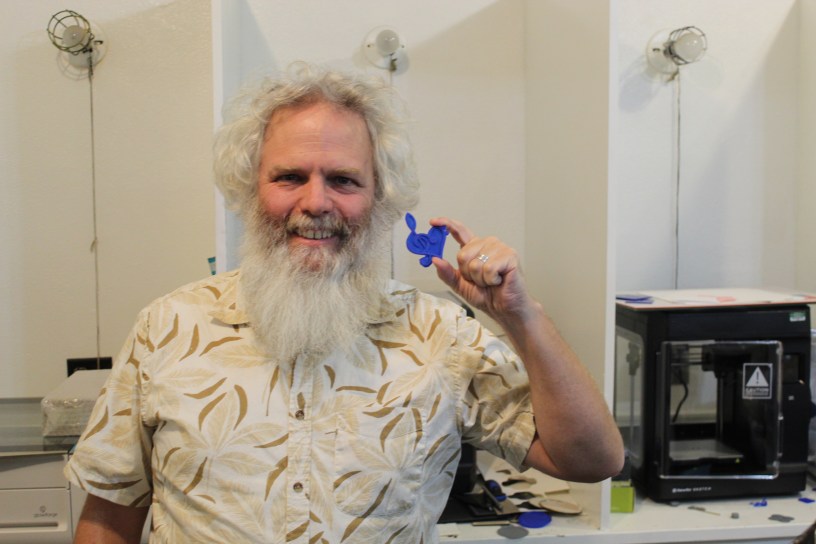
VAPA teacher Matthew Bivens teaches classes such as Painting, Design & Craft, and cartoon animation. With the grant that was given to the school, he received a 3D printer and a laser printer. Bivens has been teaching 3D modeling his entire career and always wanted a high-quality printer that would not only last through the years but also be simple and easy to use to help students better visualize their art theories.
Bivens plans to use the new 3D printer to incorporate a new unit on fabric design. In his Design & Craft course, his final unit allows students to create a fashion lookbook which they create entirely on their own with personal models, clothes, and patterns. The 3D printer will allow for a new technique of creating patterns with stamps, without having to create a fashion portfolio out of a list of previously made. This would mean extra room for individual creativity and design which students did not have before the grant was issued.
In his painting class, he will use a special feature on the 3D printer which allows for laser cutting and etching, where students will be able to have design control over the engraving.
“I have a variety of other ideas I have for it,” Bivens said. “It really comes down to where it fits into other projects.”
Bivens hopes that as time passes, the 3D printer will benefit the “iterative design process” that he teaches all his students, meaning that there is room for improvement in all the units, and through experimenting and collaborating, it all comes down to every individual students’ thought process, and desire to craft.
Bivens is just one example of a teacher whose students will benefit from new technology.
 The Plaid Press