By June Peers
The Ivy League is a collection of prestigious universities that denote scholarly excellence and endless possibilities for networking. At first glance, the Ivy League focuses purely on furthering each student’s educational potential. However, many people overlook how two Ivy League universities, Columbia and Cornell, are still keen on instilling both brains and brawn into their student body. To test athletic ability, many Ivy League students are required to perform a swimming test to graduate. From as early as 1919, this mandate has been prevalent at esteemed universities nationwide but was abandoned by six Ivies throughout the past few decades.
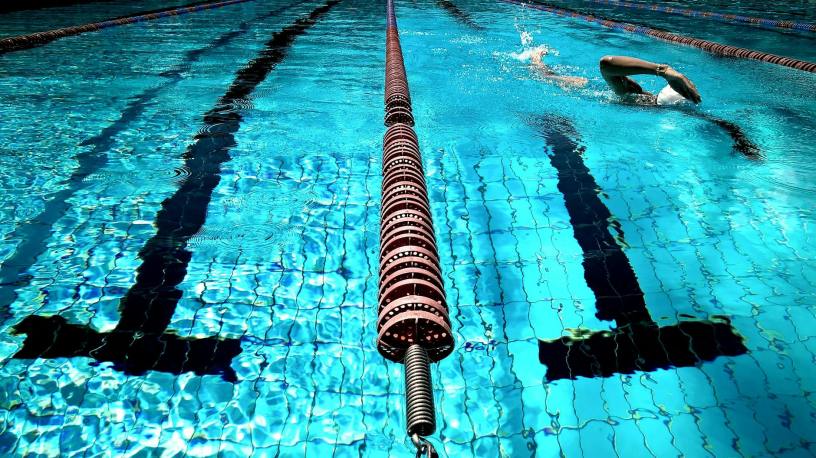
According to Columbia University, “The test consists of swimming three continuous unassisted laps of the pool (75 yards total) using any stroke or a combination of strokes.” Students who fail the test must take a beginner swim course to receive their diploma.
Although one could argue that the test is a ridiculous burden added to the already long list of graduation requirements, these institutions preach that preparing for the test offers many lifelong benefits. Not only does it fulfill a supplemental “wellness” credit but the ability to swim could also potentially save your life or others.
According to the non-profit organization Stop Drowning Now, “An average of 3,500 to 4,000 people drown per year in the U.S.”
Though swimming is a useful skill, many argue that the swimming test is an antiquated concept that negates the very purpose of any university, which is academics. People have also found that the test disproportionately targets students of color as there is a distinct correlation between wealth and the ability to swim, according to the National Library of Medicine. Without the privilege of being able to afford swimming lessons, some may simply have little opportunity to learn how to swim.
Given the criticism this graduation requirement has received, many universities have abandoned the swimming test entirely, most notably, Dartmouth College, which removed its requirement in 2022.
It is important to note that many efforts have been made to progress past the swimming requirement. Considering that the number of colleges mandating the policy fell from 42 percent in 1977 to a mere 8 percent in 1982 (according to The Associated Press), it is safe to say that swimming tests are fading out of popularity.
Ultimately, if one wishes to learn how to swim, it should be of their accord. As much as colleges can claim that higher-level education offers more than academic enrichment, a silly swimming test should not stand in the way of obtaining a degree.
 The Plaid Press