By Jenna Baker & Natalie Hanna
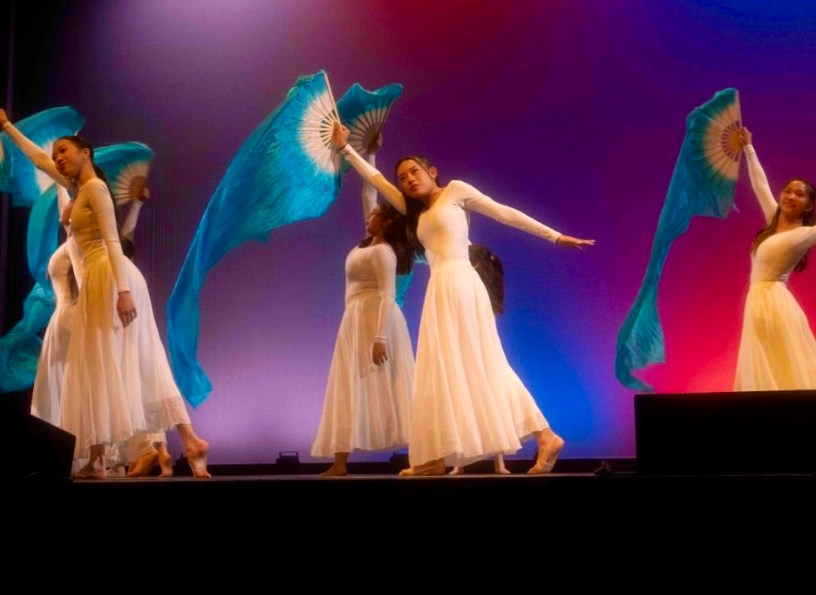
On Friday, April 19, students from the Middle Eastern Student Association (MESA) participated in an Arts Show featuring Middle Eastern performing arts in Rawley Hall. The multicultural show featured many different songs, dances, and poems, highlighting the beauty and diversity of Middle Eastern cultures. The show was a great way for student performers to embrace and learn more about their culture as some had no prior experience in Middle Eastern singing or dancing. Students enrolled in the Arabic language course–taught by Manar Mayalah–spent days rehearsing during class and after school to prepare for this performance.
Freshman Loliana Gurgus and sophomore Perla Daoud belly danced to an Arabic song called “Shik Shak Shok” by Hassan Abu El So’oud. This popular Arabic song had the crowd clapping along to the beat as they cheered on the two girls.
There were several traditional dances performed during the show, including the Dabke as well as Assyrian and Arab dances.
Junior Aziz Essio also showcased a poem called “Five Letters To My Mother” by Nizar Qabbani. The writer reflects on his love for his mother and longing for his homeland of Damascus.
“It was pretty easy for me,” Essio said. “I practiced the tone, the variety, and the rate of speech.”
Freshman Massa Daoud sang an Arabic song entitled “Kanou Ya Habibi” by Fairuz, translating to “They Were, My Love.” Fairuz’s song is about longing and reminiscing, much like Qabbani’s poem. This was Massa Daoud’s first time singing in front of an audience.
“I had to do a lot of voice warming up and I learned the part of the song a week before,” Daoud said. “I like to sing and act, I’ve never sung in front of an audience before. It was kind of nerve-racking but I had fun.”
As the Arabic language has a wide range of speakers from various countries, the show allowed Middle Eastern students to connect as one.
“When I was helping out for the show, the thing that was most brought to my attention was how everyone, regardless of where our parents are from, was connected as one culture.” junior Roy Azzam said.
Though many of the speakers in the show speak fluent Arabic, those who do not speak it fluently were able to better connect with their culture. Furthermore, it was also a good experience for those who feel out of touch with their own culture. By giving students these opportunities, they can learn more about themselves and their identities.
 The Plaid Press