By Nicole Kalosh & Keith Lokmagozyan
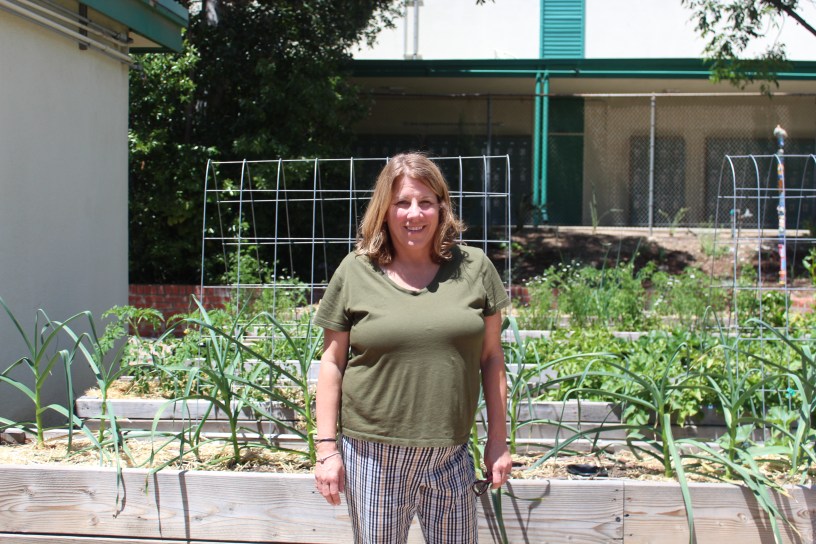
In a world where environmental issues are becoming increasingly urgent, small changes can make a big difference. That’s why Granada Hills Charter (GHC) biology teacher Brenda LaFlamme, along with her Biology and Sustainable Agriculture class, is proposing simple yet impactful changes including switching to compostable packaging and cutlery for lunches on the GHC campus and starting a recycling program.
The first part of the proposal is straightforward: GHC food service should use compostable packaging and cutlery for student and staff lunches. This small tweak in our everyday nutrition and lunch periods could have significant positive effects on our environment and school community.
The second part is more challenging as it requires not only student accountability in recycling their waste but also finding a company that can affordably help us to recycle.
The proposal looks to CSUN as a model for sustainability.
LaFlamme, the brain and power behind this initiative, emphasizes creating a more sustainable school environment. She believes everyone must do their part, especially in the face of climate change.
“When Ms. LaFlamme talked to me about her wonderful plans to create a more sustainable school environment, I was eager to be a part of it,” senior Alexia Lim said. “Especially with climate change catching up to us, I thought it was the least we could do.”
It’s easy to overlook the impact of seemingly small actions like using plastic utensils and packaging. However, as LaFlamme points out in her class, these choices have far-reaching consequences.
“Although I may not know everything about the science of climate, I do know that climate change is affecting many underprivileged communities, our farmers, etc,” Lim said.
Indeed, the effects of climate change are felt disproportionately by marginalized communities and those least responsible for environmental degradation. LaFlamme finds it disheartening that those who contribute the least to pollution often bear the brunt of its consequences. By transitioning to compostable materials, GHC can step towards sustainable practices, ensuring that our actions do not exacerbate existing inequalities.
But why stop there? LaFlamme and her class recognize that this proposal is just the beginning.
“Although this may not be much zoomed out, baby steps are always better than no change at all,” Lim said. “We never know, if this outcome is successful, someone else might continue this mission and expand it later on.”
By implementing this change, GHC can set an example for other schools and institutions.
“We wanted to make an impact in ways that we can and this is one of them,” Lim said. “We hope to leave Granada greener than what we started with.”
In addition to the environmental benefits, transitioning to compostable packaging and cutlery can also serve as an educational opportunity for students. It provides a tangible example of how individual actions can contribute to larger environmental goals. By involving students in the process, LaFlamme hopes to instill a sense of responsibility and stewardship for the planet.
Overall, the proposal to use compostable packaging and cutlery at GHC is a simple yet powerful step towards creating a more sustainable campus. By implementing this change, we can reduce our environmental footprint, promote environmental justice, and inspire future generations to take action. As LaFlamme and her students demonstrate, even small actions can have a big impact when working together towards a common goal.
 The Plaid Press