By Abigail Kim & Stephanie Tran
As schools continue to prioritize inclusivity and diversity, one especially exciting addition is the new Advanced Placement (AP) African American Studies (APAAS) class. Scheduled to launch in the 2024-2025 school year, this course will enable students to delve into the history and culture of African Americans. This class will allow students to gain a deeper understanding of the African American experience and its impact on American history and culture.
APAAS will cover a wide range of topics including the history of African Americans from pre-colonial Africa to recent events such as Black Lives Matter, contributions of African Americans to American society, and the challenges that the African American community have encountered throughout their quest for equality and justice. However, APAAS will not only examine historical aspects of African American history but will also integrate lessons about the uniqueness of African American culture. Students will be able to cover topics such as cuisine, dances, traditions, etc.
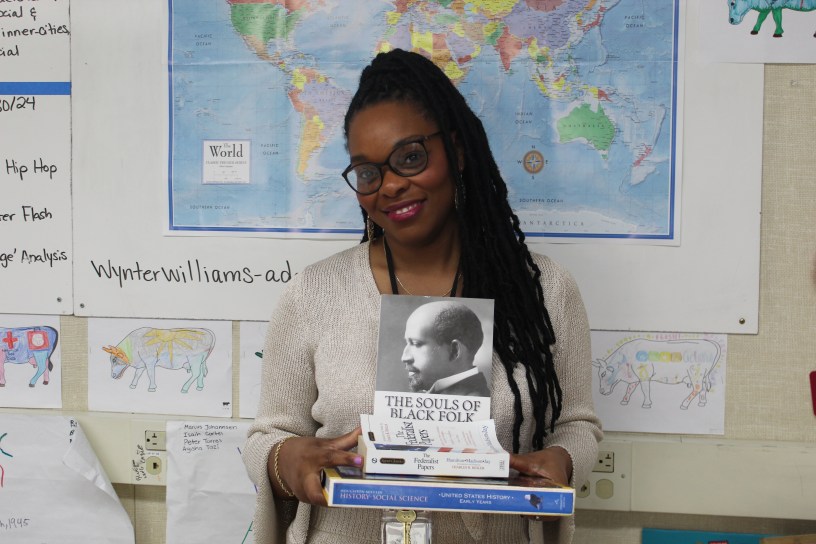
The class will be taught by social science teacher Wynter Williams-Adams. Williams-Adams plans to teach the course by engaging students with note-taking, reading assignments, and class projects. There will also be student-led discussions for further understanding of the course. There will be assessments that require writing and multiple-choice questions to prepare for the AP exam.
Williams-Adams sees the course as an opportunity for students to engage in meaningful discussions surrounding race, identity, and social justice, themes that are becoming significantly more important in the current world.
“When we talk about the history and culture of America, it’s often just looked at through a white lens,” Williams-Adams said. “We leave out people of color, particularly black people when we talk about the creation of and influences on the country. I think it’s important to highlight other people who have also influenced and built this country.”
Granada Hills Charter’s (GHC) introduction of APAAS signifies a significant step towards promoting diversity, equity, and inclusion within students’ educations. By offering the opportunity to study the history and culture of African Americans at a more in-depth scale, GHC is not only enriching its curriculum but also encouraging students to become more informed and empathetic people.
According to Administrative Director Robert Walker, it was for this very reason that GHC chose to implement APAAS into the curriculum.
“AP African American Studies gives voice to a part of our school community who do not always see themselves reflected accurately in our social studies textbooks,” Walker said. “In doing so, it can help foster a stronger sense of cultural awareness for all of our students and help them to be better prepared to engage productively as a member of American society, within and beyond school.”
Dr. Walker has also hosted an Ethnic Studies Advisory meeting for the past few months, Students, teachers, and administrators met to discuss offering more ethnic studies classes, not just through social science but also through other classes such as visual and performance arts and culinary arts.
Junior Rachel Rogers, the president of the Black Student Union (BSU), plans to enroll in the APAAS course in the upcoming school year. She expressed her excitement about the prospect of APAAS being integrated into the course offerings at GHC.
Having an African American Studies class is an aspiring start towards creating more diversity. With the class having the opportunity to go more in-depth with African American successes and origins than what is shown in usual history classes. This can equip us with different perceptions that we would typically think of, and a curiosity that can favor the minds of young students.
Rachel Rogers
Ultimately, the course will expand students’ knowledge about American history and the diverse range of people who have helped create it. It will provide an opportunity for students to learn about other cultures and implement equality within society.
 The Plaid Press