By Dylan Huber
It is the normal condition of high school students to toil with a kind of blind foresight. They foresee the clearest of ends: acceptance into college, a well-paying job, and a contented existence; all of this is achieved simply through the relentless enactment of their thousandfold means. And who among us could blame them? Each moment of their life is constantly presented with the most certain of certainties, the most irresistible of all charming falsities: that everything will be worth it.
Graduation slowly approaching, one endures the chosen damnation of senioritis, attends each absolutely necessary event, and remains chained to the resolute unfreedom that defines them entirely; the unlit chasm of ignorance, wherein they yet still remain, is alone their sole comfort. Only, this cannot last forever. They may end up being a part of those most exalted few who get into their “dream school” and perceivably obtain everything they’d ever wanted, or they get roundly rejected, despite their respectably interchangeable efforts, and perceivably obtain nothing; this all matters little. In any case, they have escaped.
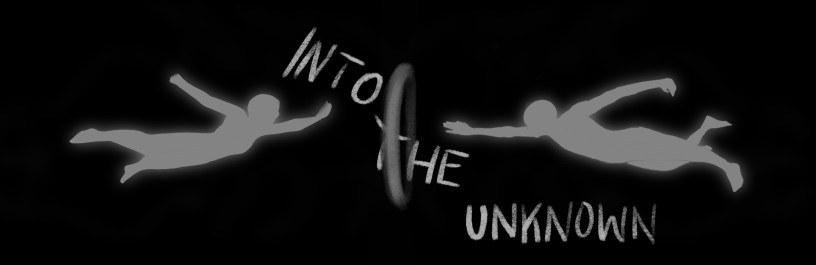
They have left the machinery of high school existence and entered, as it were, into the vast unknown.
There is an air of purposelessness that envelops the summer after Graduation; a malaise without structure, a life without cohesion. All else before, even during the heights of senioritis, was still firmly embedded within the form of high school. When that backdrop finally falls, the student can no longer ignore their condition, for that condition is no longer necessary.
What is left, then? What course of action must follow? What new end must be sought? None. Let us again imagine the student that got everything, entered into their dream school, and that truly unspeakable alternative. They are both left with two options: looking with either prideful or shameful sentimentality at the drawn-on past or turning towards an empty future.
The past, for its part, has always an admirable form to it; it is a well from which one can glean anything they desire. If they want pride, shame, sadness, or happiness, it is all there for them. The future, on the other hand, is formless. Sure, with structure one can project a form onto it, believe in it truly, and let it guide your every action, but eventually, that structure must disappear. The (former) student, in looking toward the future during a time without structure, is staring down the void itself. It is their decision on whether to enter it.
In not entering it, not charging headfirst with a powerful authenticity, they are condemned to infinite malaise, with the singular comfort of the past. They, for all intents and purposes, presently live there; they are alone, comforted only by a strange form of “self” that they have deceived themselves into still believing they are; they must always believe that everything was worth it, thus they cannot look into the future that might not make it so. It is a stasis at the precipice of freedom. It is cowardice in fear of the leap.
Structure is an innately deterministic force in that it creates a steadfast belief in determinism. When people have structure, there is an already present grounding on which their every action stands; they need not be anything more than robotic beings, bereft of humanity. To accomplish anything within the realm of apparent structure, one needs little more motivation than the insipid knowledge of cause and effect.
To enter into the empty future, this void absent structure is to renounce this type of existence. It is to reject the deception that has clouded the mind, the untruth that has consumed one for so long; it is to wholeheartedly accept the most potent, terrifying, and freeing of all realities: perhaps everything will not be worth it.
There will, of course, be times when structure returns and one is at risk of enchantment. But now is not that time. Right now, in this singular moment without grounding, one must leap into the air. One must finally be free.
 The Plaid Press