By Sean Yoo
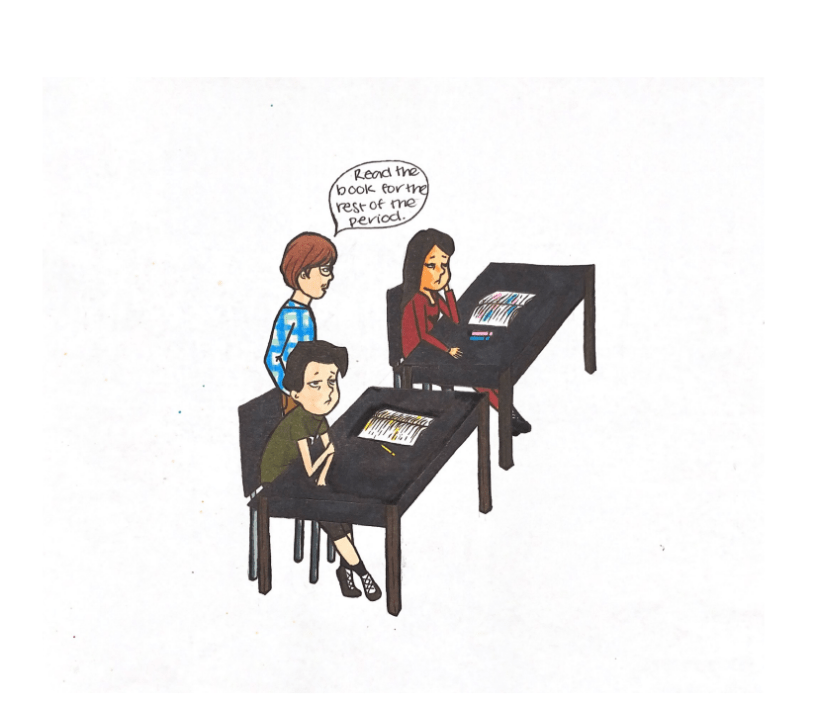
Every student has a teacher that they will remember for the rest of their life. From elementary school to college, teachers can leave a mark on their students’ lives years after they leave the classroom. However, with rigorous coursework increasing year by year, some teachers have begun sacrificing those vital relationships for the sake of getting through the material.
While many great teachers at Granada Hills Charter (GHC) truly care about their students and want the best for them, others prioritize educational instruction over necessary connections. It is important to note that for students to learn effectively, they need to be able to trust the people from whom those lessons are coming.
“Once the bell rings, it’s like the teacher-student relationship is over,” junior Recrei Park said. “There are moments when it’s hard for me to ask teachers questions, and it’s hard to reach out to them outside of class.”
The feeling of disconnect can be particularly challenging in today’s digital age, where communication often extends beyond the classroom. For many students, email is the primary way to reach out to teachers for help or clarification.
If a teacher fails to respond to an email or responds in too brief a manner, it could discourage students from reaching out again in the future. Although it’s understandable that emails get lost in the busy hustle and bustle of the school day, a consistent lack of response can create a communication barrier.
For many students, emails are a way to reach out to teachers that they cannot seek out after class, whether this is with questions about a homework assignment or seeking clarification on a point of discussion during class.
In a world where online communication often feels more comfortable than face-to-face interactions, students might have more difficulty approaching teachers in person. Teachers should, therefore, make sure to send timely and thoughtful responses as this is crucial to students’ academic success.
Another challenge to building a strong student-teacher relationship is the high expectations set by some teachers. High expectations can be incredibly motivating and help students achieve their best. But this only works on a foundation of trust and rapport, which many GHC teachers have established. When teachers take the time to get to know their students, they can tailor their expectations to each student’s individual strengths. Without that connection, however, high expectations can feel too daunting.
“This is my first year in high school and I could already feel the amount of expectation and pressure that teachers are putting on students,” freshman Claire Zarate said. “The overall way that teachers teach expects me to already know the topics they are teaching and when I fail to understand them, I can feel the disappointment through their sighs and tone of their voice. It sometimes leads to a doubt in my skill set that discourages me at moments.”
While some students thrive under the pressure, it causes others to crack. Teachers who know their students enough to understand which type of dynamic works are the ones who produce the most successful students in the long run.
Not all teachers are intentionally distancing themselves from their students. With how spread-thin teachers are, it’s understandable that building relationships is not at the top of their extensive to-do lists. Instead of dedicating time to getting to know students through quick ice-breakers on the first day of school, it should be a natural process throughout the school year. For example, checking in on a student that appears to be struggling only takes a minute for a teacher, but can save their student hours of stress. These small actions would allow the student to be much more comfortable with the teacher, allowing them to exceed their potential.
Ultimately, the key to a successful student-teacher relationship lies in finding a balance. A teacher who focuses strictly on material and just assigns worksheets with disorganized deadlines may not foster a supportive learning environment. However, a teacher who focuses too much on building relationships will also not be able to foster a productive learning environment as the majority of learning would be sacrificed. Therefore, a student-teacher relationship is best when there is a perfect balance between focusing on teaching the material and getting to know the students.
 The Plaid Press