By Viviana Morales
This school year, students were introduced to SmartPass, a digital hall pass system designed to streamline student movement and enhance school safety. Students use SmartPass to enter campus and to leave classrooms during class.
The school rolled out the new system during Summer Transition Academy (STA) this year. According to Administrative and Student Services Director Julian Gomez, who coordinated the integration of the new software, the school used ParentLocker mainly for COVID-19 safety concerns. However, as COVID-19 is less of a serious concern, administration sought a system that would look at other safety concerns as well, especially while classes are in session.
“We wanted to start moving away from ParentLocker, and we wanted a more dynamic software to be able to keep students safe while they move around campus,” Gomez said.
With SmartPass, students send a request to their teachers via their Chromebooks to ask for a digital hall pass. Students select where they are leaving from and the location they are headed to, whether that is a bathroom or an office.
Students have the ability to select specific bathrooms such as A building girls or C building boys, etc. Teachers, in turn, approve the requests online, eliminating signing the hall pass.
Teachers, campus aides, and administrators can also select a student to view their hall pass history. This can tell them how many passes a student has requested recently and how long a student was out of class on a particular pass.
This monitoring is aimed at ensuring students are in class when they should be and focused on instruction rather than wandering.
During the transition time as the school learns the best way to use SmartPass, students are still required to carry clipboards, but administration is working on how to eliminate a physical pass. Carrying the clipboards allows staff to see that a student is out of class with teacher permission.
“The SmartPass system is so much quicker and less disruptive than having students haul a clipboard to the bathroom and back,” English teacher John Tucker said. “I’m very glad we are shifting to the new system.”
However, the transition has not been seamless as staff and students learn the new system.
“Teachers take forever to approve your request to go to the bathroom,” junior Miguel Hesperides said, “and most aren’t even near their desks when I request to go, which causes even more waiting.”
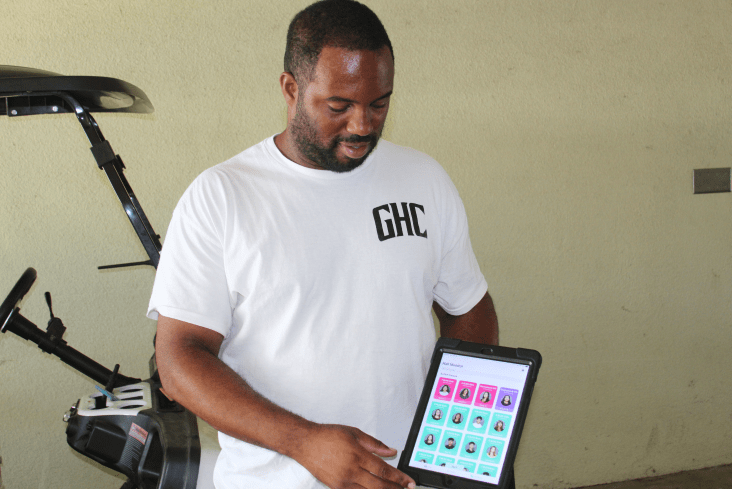
The school has addressed this by supplying teachers with iPads that are more portable, but teachers are still learning the system and how to navigate it while also teaching.
Other students are more concerned about the consequences of taking too long when the pass is digitally timed.
“It’s not too bad because it keeps us safe, but some people, like me, freak out about whether or not we’ll get back in time, even if we are not wandering around,” junior Elysse Diaz said. “What if a bathroom is closed or what if I get my period and need a little more time? That causes stress for students.”
Gomez suggests that it has more positives than negatives and has already proved to be effective.
“Of course, there are always going to be rough transitions, but the overall effectiveness of SmartPass was very positive, which allowed us to bring it into the official school year,” Gomez said. “If you’re having trouble before entering school, try turning off your wifi on your phone.”
SmartPass was created in 2018 by high school seniors Peter Luba and Dhruv Sringari alongside their assistant principal. They intended the application help their school hallways be quieter during school hours.
 The Plaid Press