By Patricia Fontejon
It’s been over 130 years since the record player was introduced and more than 30 years since CDs gained popularity. Today, with music streaming services such as Spotify and Apple Music dominating the industry, the way we, especially Gen Z, consume music has drastically changed.
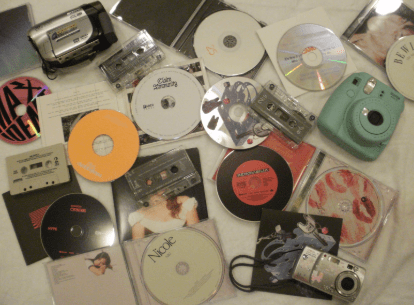
But it’s not just music consumption that has evolved. The way we engage with media as a whole is entirely different from past decades. Yet, despite this rise of the internet and digital media, Gen Z continues to embrace physical formats like vinyl records and CDs alongside other nostalgic goods such as digital and polaroid cameras. But why? Why do we gravitate toward digital cameras instead of our iPhones?
“The aesthetics that come with these items is what makes them so noteworthy,” senior Justina Estur said. “With a digital camera, the photos come out grainy and a bit blurry. And the physicality of polaroids offer a nostalgic feeling of the early 2000’s, even if I wasn’t there to experience it.”
Nostalgia has even influenced media production. For example in season two of “Euphoria,” Director of Photography Marcell Rév opted to shoot in 35mm film. The creators of “Euphoria” even brought back Kodak’s Ektachrome film stock because they really loved its distinctive aesthetic. Film has a tangible quality that digital lacks, another testament to the enduring appeal of retro technology.
Several factors contribute to this nostalgia. Many Gen Zers grew up consuming media from the early 2000s, including TV shows, movies and music. Platforms like TikTok and Instagram have also popularized this nostalgic trend with hashtags like #nostalgic and #tbt (throwback Thursday) in which many Gen Z reminisce of what it was like to grow up in the early 2000’s, transitioning from Saturday morning cartoons to having to watch a YouTube video to get through a meal.
“Our fascination with the past is tied to the fact that, as people, we tend to desire the things that we don’t have, including what we don’t have anymore—whether it be our youth, our childhood, or the experience of growing up in the early 2000s,” Jalyn Cameron said for an article on “The Hilltop.”
At its core, Gen Z’s attachment to these nostalgic artifacts reflects a deeper desire to differentiate themselves. Ours is a generation overwhelmed by the pressures of social media, the impact of global events, and the constant barrage of information. Many feel disillusioned by the We still collectively deal with issues such as shopping addiction, phone addiction, and the constant demand for online engagement.
Nostalgic objects and experiences provide a form of comfort, allowing GenZ to reconnect with simpler times that feel less complicated. In holding onto vinyl records, CD collections, vintage cameras, and retro aesthetics, Gen Z can carve out a unique identity that distinguishes them from other age groups. Although their peers may be glued to streaming platforms and instant social media gratification, this generation finds meaning and enjoyment in slower, more intentional experiences. The tactile experience of playing a record or waiting for a Polaroid photo to develop embodies nostalgia that many crave amid a fast-paced digital world.
Many Gen Zers may not have experienced the early 2000s firsthand, but they have grown up immersed in the media and culture of that time through parental influences, popular reboots, and endless digital content. This inherited nostalgia allows them to forge connections with generations past and create a sense of belonging through shared experiences, even if mediated through screens.
 The Plaid Press