By Kai Bwor
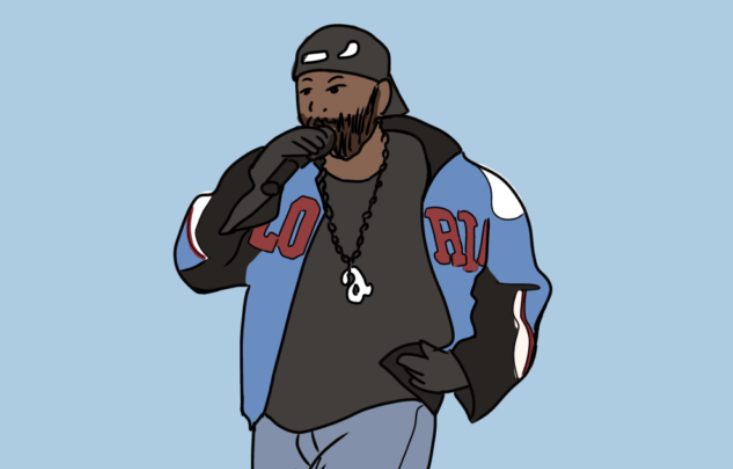
Kendrick Lamar’s Super Bowl Halftime Show was the ultimate vibe, perfectly capturing the essence of his lyric from “Luther” with SZA, “It’s a vibe, do your dance, let’em watch.” As he performed and let the world watch, Lamar used the world’s biggest stage to create a powerful statement on race, power, and American identity. By integrating historical and political symbolism, he uses his legacy of music as an approach to storytelling and activism.
Lamar’s impact on the music industry is undeniable, and his recognition speaks volumes. In 2018, he became the first rapper to win the Pulitzer Prize for Music with his album “DAMN,” cementing his status as a rapper who is not just skilled in rhymes, but also powerful social commentary.
The Super Bowl halftime show is one of the most-watched televised events in the world, offering artists a rare opportunity to reach an audience of millions. Lamar’s performance garnered 133.5 million viewers, the highest halftime audience ever recorded, according to Billboard and Vulture.
Samuel L. Jackson opened the show dressed in striking red, white, and blue attire, embellished with stars. Introducing himself as Uncle Sam, he embodied a personified version of the United States, representing both the people and the federal government. Traditionally, Uncle Sam is depicted as a stern, elderly white man, as seen in the iconic “I want you for the US Army” poster.
By casting Jackson, a Black man, as Uncle Sam, the performance challenges the traditional image of America, highlighting that the nation is not solely represented by wealthy white men. This choice underscores the significance and contributions of Black Americans in shaping the country’s history, culture, and identity while advocating for a more inclusive and accurate portrayal of American society.
When Jackson, portraying Uncle Sam, said, “This is the great American game,” he spoke well beyond the literal football game being played, with the term “games” here symbolizing the various systems and structures that govern and influence American society including capitalism, politics, the criminal justice system, and social structures. These systems shape wealth distribution, job opportunities, citizens’ rights, mass incarceration, and societal norms.
Spotlighted, Lamar began with a rap from an unreleased song, “Bodies.” As he finished, dancers in red sweatsuits emerged from beneath the stage, lights flickering as they bowed to him and he sang, “The revolution ‘bout to be televised/You picked the right time, but the wrong guy.”
This line references “The Revolution Will Not Be Televised,” a Black liberation poem and song by Gil Scott-Heron from the 70s. The poem critiques the media’s relationship to real-world change and calls for action. “The Revolution Will Not Be Televised” urges people to reject passivity and engage in real, meaningful activism. Lamar purposefully uses the televised nature of the Super Bowl, however, to display this message.
Lamar said, “You picked the right time, but the wrong guy.” In his performance, he critiqued the so-called American game by highlighting the division rather than unity in America during the Super Bowl—a patriotic event that typically unites Americans around their love for football. This set the tone for the entire performance.
After this moment in the set, Jackson, as Uncle Sam, cuts in, during Lamar’s performance of “Squabble Up,” exclaiming, “No no no no no! Too loud, too reckless—too ghetto! Mr. Lamar, do you really know how to play the game? Then tighten up!” Historically, Uncle Sam has symbolized government overreach, whether through taxes, surveillance, or other forms of control. By reimagining Uncle Sam in a satirical role, Lamar emphasized the contradictions in American power structures and how the government expects people to play their “game.”
This “game” includes economic inequality, political suppression, and mass incarceration, which disproportionately affect marginalized communities.
The field at Caesar’s Superdome was lit into nine squares with Xs, Os, and triangles popping up, resembling buttons on a PlayStation controller, emphasizing the symbolic game. However, Lamar ended his performance in front of a glowing “Game Over” sign, signifying his refusal to play the American government’s “game” and his readiness to spark change and start a revolution.
Lamar seems ready to ‘squabble up’ with the government, challenging its authority and calling for change.
Lamar’s halftime show was a cultural moment that highlighted the political messages regarding the unfair treatment of Black men and women in the United States. His use of imagery, such as the U.S. flag formed and divided by Black dancers, showcased the contributions and struggles of Black Americans throughout history. Lamar uses a divided American flag with himself standing in the middle to represent a country divided by ongoing racial and political tensions.
Through his intricately detailed choreography, carefully curated imagery, and meticulously thought-out symbolism, he invited audiences to not only watch, but also consider how they can “squabble up” to take part in the revolution.
 The Plaid Press