Granada Hills Charter offers a wide range of athletic and academic teams, from football and soccer to speech and debate and mock trial.
These programs represent the school at state and national competitions and continue to grow each year. But that growth comes with an often overlooked challenge: cost.
Whether it be time, money, or effort, campus-wide teams consistently put in maximum effort around the clock. With so many bases to cover, coaches, advisors, and team leaders can compare their duties to other demanding professions.
“Outside of coaching, the planning component of it is like you’re a small CEO,” boys basketball head coach Jonathan Bent said. “You have to take inventory, you have to schedule, you have to make purchase orders, whether it is coming out of our trust fund or the school for money.”
Funding varies by program, as some rely on the school, others on fundraising, and some like DECA, benefit from Career Technical Education (CTE) grants.
“The great thing about DECA is that it’s part of CTE,” head DECA coach Troy Aiken said. “So all business classes are part of CTE, which allows us to get grant funds. For example, we apply for CTE specific grant funds like the Perkins grant, which is a federal grant.”
Even so, funding fluctuates each year, leaving teams to find creative solutions.
“I’ve been here a long time,” Coach Bent said. “We’ve used a lot of different funding methods, Snap! Raise is the easiest.”
An online fundraising platform that raises money for teams through an automated outreach system, Snap! Raise has been a loyal supporter of GHC teams for many years, raising tens of thousands over the years.
But as effective as fundraising may be, it is imperative that students and administration continue to recognize the importance of educational fundraising.
“A thing that inspired me to become financial director of DECA was seeing our current political landscape,” junior year financial director Ysabella Doo said. “It shows me how important education is, and how funding for education is one of the critical parts of ensuring that every student gets care.”
Behind the scenes, staff like student store manager Mayra Alapizco emphasize the collective effort it takes to keep programs running.
“It all starts with the teams,” student store manager Mayra Alapizco said. “We are here as a support system for them and anything that they need, we figure out how to accommodate or how to help them through the process.”
Although the work isn’t always visible, sustaining GHC’s programs proves that running a team really does take a team.
GHC teams balance growth and funding challenges
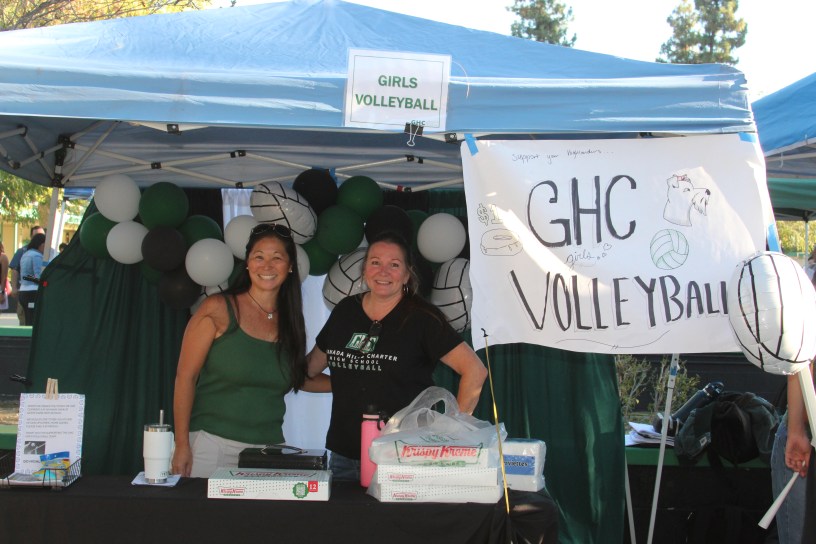
Volleyball team coaches pose in front of back-to-school night booth. Photo by Francesca Catanese / Plaid Press
 The Plaid Press