With every stride, the trees lining the trail seemed to blur into a single motion, and senior and varsity team captain Tristan Bookman could feel the quiet clarity that only comes with distance and effort. Each step taken only accumulated more dirt and mud beneath his feet, allowing his body to slightly sink into the ground below him. The growing ache in his muscles practically begged him to stop, reminding him how demanding his sport truly is.
Cross-country consists of long-distance races on trails over only natural terrain of grass, mud ,and hills, contrasting with track and level track. Although the physical conditions increase the difficulty of the sport, the real challenge lies in the mental strength it demands.
So far this season, the Granada Hills Charter (GHC) team has shown that strength on full display. At the 2025 Nike Portland Race, the boys varsity team placed 11th out of 29 teams, while the girls recorded several personal bests. The athletes also competed at The Sacred Heart Invitational, where dedicated senior and varsity captain Isobelle Zambrano earned 5th place.
“It’s one of the hardest things because you have to be mentally strong every single day,” Zambrano said. “And it’s not about the fact that you can run for a long time, but how you can endure the conditions for such a prolonged period is what makes someone strong.”
This endurance has paid off this season. The Highlanders recently competed at the Central Park Invitational, earning two top ten finishes. This meet highlighted how the team’s training and mental focus translate into success on the course.
That endurance comes from more than just physical training. The will to complete each race is composed of multiple factors.
So although every athlete has their own reasons, shared motivators unite them, the drive to surpass personal limits and the desire for constant self-improvement.
“Oftentimes I think about how I can get faster or beat this time,” Zambrano said. “And in general, cross country helps me a lot with both my mental and physical health and enables a new perspective on my own limits, showing me just how much I’m able to achieve.”
But to complete a race goes beyond internal willpower. A strong competitive drive also fuels an athlete’s endurance and pushes them to keep moving when every muscle screams to stop.
“I think about how big the gap between myself and the best person is,” Bookman said. “I aspire to be their competition, so if they’re not taking a break then I’m not either.”
Even though cross-country is often seen as an individualism sport, it thrives on teamwork and shared support. Zambrano and Bookman agree on the importance and significance of support in the sport.
The solidarity within the team enables runners to endure the race and keep returning to the starting line.
“Going into a race feels insurmountable and insanely difficult to do on your own,” Bookman said.
Bookman recalled his initial tryout for the team, his primary experience with the mental hardships of cross-country. He emphasized the importance of the pacer who ran beside him that day, crediting that moment as the spark that solidified his passion for running as well as the support that helped him finish the run.
“Without the extra support from my teammates and coaches I would have probably collapsed from exhaustion or just burned out totally during many races,” Bookman said.
Cross-Country Endurance Aided By Support
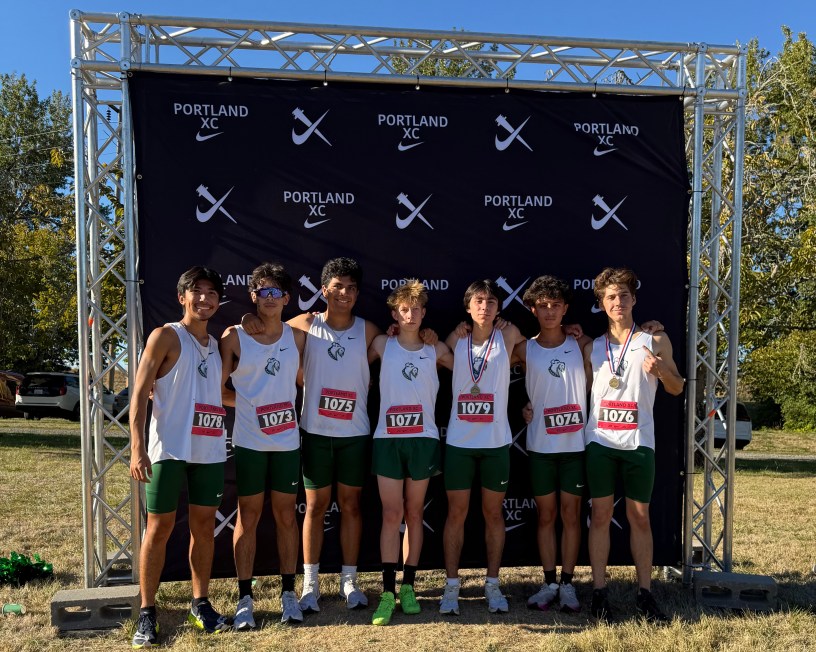
The boys team poses following their competition. Photo by Michelle Hernandez / Plaid Press
 The Plaid Press