By: Rowenn Jaeger
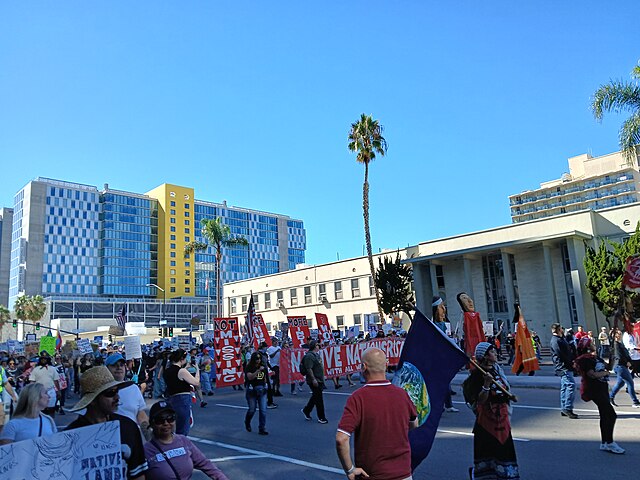
On October 18, 2025, millions of Americans filled streets and city squares for what organizers called “No Kings Day.” The nationwide protest, held in over 2,500 locations, called for protecting democracy and rejecting what many see as growing authoritarianism in U.S. politics. Marches took place in major cities like New York, Washington D.C., Atlanta, and Los Angeles, as well as smaller towns across the country.
Protesters carried signs reading “No Thrones, No Crowns, No Kings” and “Democracy, Not Dynasty.” According to many reports, the protests were largely peaceful, with only a few minor clashes reported. In Atlanta, over 10,000 people marched from the Civic Center to the state capitol, while in New York City, the crowd stretched for blocks as more than 100,000 participants joined.
The No Kings movement began as a social-media campaign earlier in 2025 but grew into a nationwide call for civic participation. The phrase “No Kings” references America’s founding ideals of independence and equality-values protesters say feel threatened by recent political events. While many participants described the day as empowering, critics dismissed it as partisan.
Some Republican lawmakers labeled the movement a “hate America rally,” though organizers emphasized that their message was about democratic accountability, not party politics. Despite differences in opinion, observers across the spectrum agreed the demonstrations showed widespread public engagement-especially among young people. High school and college students joined marches, created posters, and shared live updates online.
For many students, No Kings Day was their first major protest experience.
October 18 is a day of reflection. For high school students, it offered a lesson in participation, perspective, and purpose. The protests showed that activism isn’t limited to adults; students played major roles in organizing meetups, designing posters, and documenting events on social media.
Seeing millions peacefully protest helped many realize that democracy depends on active citizens, not just politicians. And whether through activism, journalism, or science, young people can make an impact on how the future unfolds.
By nightfall, most marches had ended peacefully. Streets slowly cleared, leaving behind posters, chants, and conversations that will continue for weeks. Across America, people debated the meaning of No Kings Day-some celebrating it as a stand for democracy, others questioning its message.
But for students, it became more than a headline. It was a living civics lesson, a reminder that freedom isn’t automatic and that history is shaped not only by leaders, but by those who dare to speak. As one protester’s sign read, “We don’t need a crown to be heard.” A quote I think we as Americans should continue to live by.
 The Plaid Press