By: Katilyne Logan
You know the scroll. You’re laughing at a dog video, sinking into the usual brainrot, when suddenly the next reel hits harder: “Please, Please, Stay Just ten seconds to help my family, like comment, share, or donate anything helps.” Or worse: “If you scroll past me I will never forgive you.”
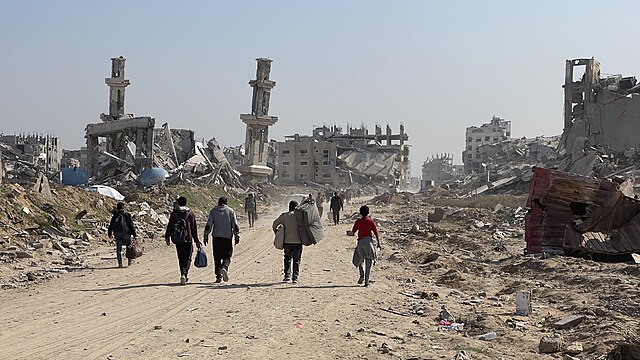
Since the announcement of an official ceasefire in October, humanitarian aid has begun to re-enter Gaza, but only tentatively. The conditions remain uncertain, and civilians continue to face starvation, displacement, and the lack of basic hygiene tools.
In the middle of that devastation, a new trend has emerged: Palestinians using the very apps built for entertainment such as Instagram, TikTok, Facebook, and X, to document their reality and plead for help.
They’ve utilized these platforms to communicate a message for help and awareness to a wider audience. Many of them, like creator Montaz Aziaza, have built a large international following who rally around his posts and amplify his voice. Creators like Ariaza are not just making content, they are offering real-time documentation of their survival.
As CNN noted in a feature on Gazan social media journalists, “Their journalism isn’t just journalism. It’s a diary. They’re showing us their lives. They’re telling us, ‘Hey, I couldn’t shower for a week.’ ‘Hey, I barely had some of this to eat today.”
Aziaza’s posts show ravaged neighborhoods, demolished homes, and the aftermath of drone strikes, images he has often captured just moments after he fled danger himself. His videos have become firsthand evidence for organizations like the United Nations (UN), which rely on on-the-ground documentation to understand the scope of human rights violations.
His work forces viewers to confront the uncomfortable truth: on one side of the screen sits someone fighting for survival, and on the other sits someone deciding whether or not to engage before scrolling on to more dog videos.
His comments sections have transformed into support networks of their own. Viewers from the U.S., England, Brazil, Uganda, and beyond leave encouragement or drop “water this plant” messages, an inside joke used to boost a video in the algorithm. Others post prayers, facts, or simple reminders urging donors to click the links.
This kind of crowdsourced compassion has helped other creators like tariqs_family_fromgaza1981 or voices_of_gaza.gaza to get their stories seen. In some cases, these efforts even help families meet fundraising goals for evacuation or medical care. Accounts like change_life _of_yahyamahdi and voices_of_gaza.gaza get their stories seen.
Of course, not all attention is supportive. Aziaza and others frequently face threats and attempts to discredit their work.
Still they continue posting knowing the alternative is silence.
According to The United Nations Office for the Coordination of Humanitarian Affairs (OCHA), around 1.5 million people have been displaced in GAZA, mostly women and children. And According to the United Nations Satellite Centre, “approximately 81 percent of all structures in the Gaza Strip are damaged.”
These numbers explain why social media has become more than entertainment for Palestinians. It has become a method of survival and connection to the world that might overlook them.
With the world at our fingertips, we’re faced with a pressing question: Do we have a moral responsibility to stay connected to global suffering when the people enduring it are reaching out directly to us?
For many families in Gaza, engagement isn’t about boosting views, it’s about staying alive. If you are able, you can support humanitarian relief efforts through the United Nations Gaza Relief Fund: https://crisisrelief.un.org/en/donate-opt-crisis,
 The Plaid Press