By Sean Yoo
As seniors finish their college applications and begin to hear back from schools, many begin to wonder what the point of the second semester really is. In reality, there is little that can happen during thai time that would drastically change a student’s college outcomes. Admission decisions are largely finalized, and only a significant drop in grades or a serious disciplinary issue is likely to result in an offer being rescinded. Instead of forcing seniors to push through a semester that feels increasingly meaningless, schools should rethink the purpose of second semester and offer real-world opportunities that better prepare students for life after graduation.
This lack of motivation isn’t just a student attitude problem, it’s a sign that the structure of the second semester no longer serves students well. This often leads to a lack of motivation commonly known as “senioritis.” Classes that were once filled with motivated seniors gradually become spaces where students are mentally checked out and simply counting down the days until graduation.
“I believe that the second semester is like a filler semester,” senior Ashton Park said. “It feels like a period where I just wait for college results and no matter what I do in school, it won’t change my result.”
Some, however, may see a second semester to be necessary for the seniors to build character. They may argue that the structured schedule of staying in school allows seniors to not be tempted by temptations of engaging in risky or unproductive activities. The second semester could be a time where seniors learn to finish what they started even when motivations are low and work feels useless.
“I believe that a second semester even after the college application process prepares me for the real world,” said senior Recrei Park. “In the future, I’m not gonna have the goal of college in mind when I’m working. So going through this semester even with little motivation is a great learning experience.”
From this perspective, second semester becomes a lesson in responsibility, learning to push through burn out, maintain responsibility, and continue to show up even with depleted motivations and no immediate rewards. This mirrors the workforce where often people work countless hours completing numerous tasks without receiving immediate payoff. With this view, it could be easy to see how the second semester prepares students for responsibility beyond just high school.
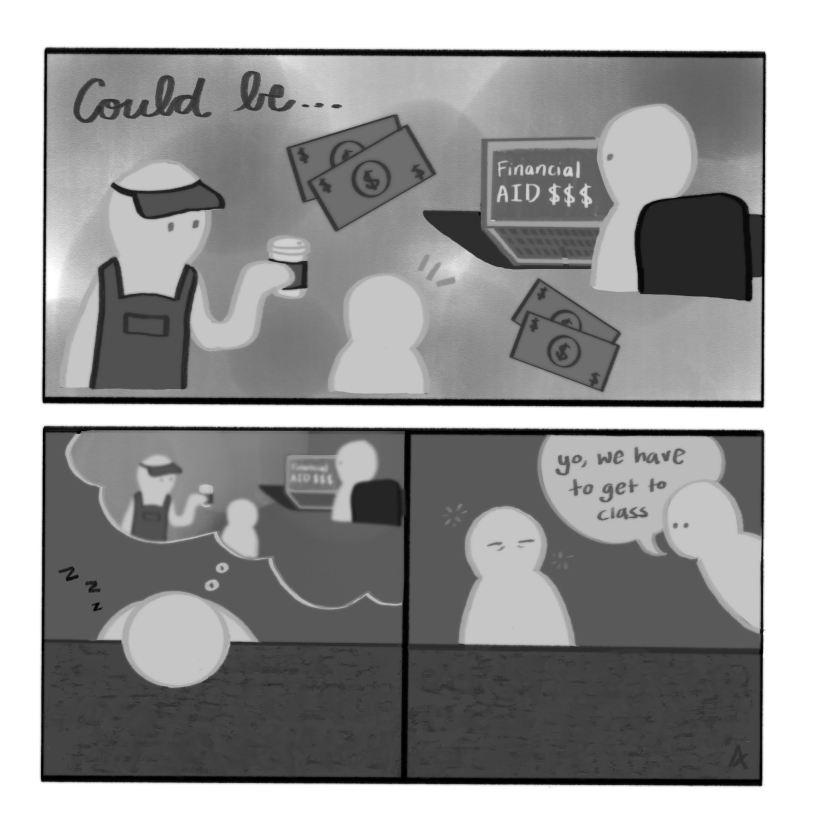
However, if the goal is to prepare seniors for the real world, wouldn’t it be more beneficial to allow them to gain real-world experience directly? Rather than having seniors remain in traditional classrooms, schools could offer opportunities like internships, part-time jobs, or work-study programs. These experiences would allow seniors to explore potential career paths while developing practical skills.
Additionally, allowing students to take advantage of this semester to work would allow them to save money for college. With rising tuition, textbook, and housing costs, earning money before college could reduce financial stress.
By reducing traditional coursework and replacing it with real-world opportunities, schools could increase student engagement even during a period where motivation is naturally low. Schools could still maintain accountability with reflection projects that encourage students to connect their experiences to future goals rather than completing assignments that feel disconnected.
Modeling the second semester of senior year after a career technical education (CTE) would allow students to make meaningful use of their remaining time between high school and college to gain real world experiences. Rather than feeling stuck in a classroom doing what may feel like redundant work, seniors could gain valuable experience that better prepares them not just for college but also careers and adulthood.
 The Plaid Press