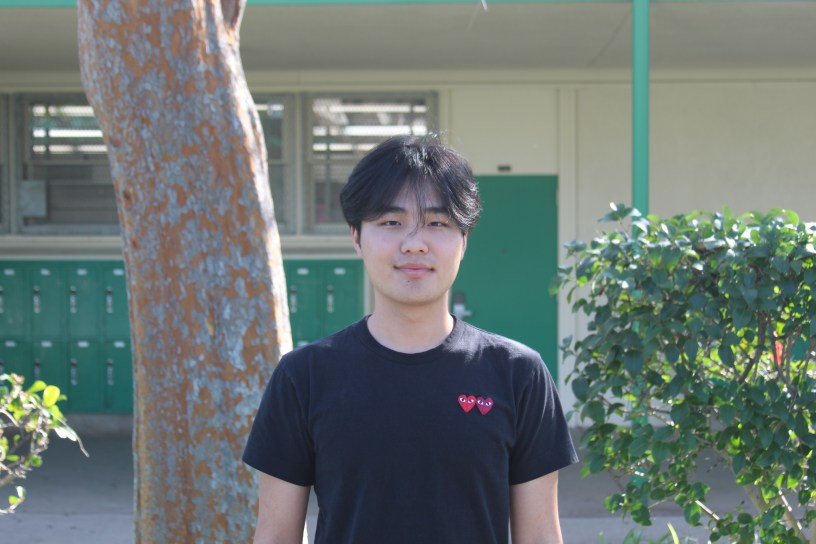
Under the glowing stage lights at Carnegie Hall, senior Recrei Park takes a steady breath with his hands hovering just above the piano keys. As the audience settles into silence, Park registers the weight of the moment, not just of the prestige of the venue, but also the years of practice that brought him there.
At 17 years old Park performed at one of the most renowned concert halls in the world, one that has hosted music legends such as Pyotr Ilyich Tchaikovsky, Leonard Bernstein, and Duke Ellington. This was a milestone that marked more than just a note on his resume. For him, the performance represented a turning point in his relationship with music, a relationship that began not with passion, but pressure.
Music was never a choice for Park. He began piano lessons at age five at his parents’ insistence, and for years, his endless practice felt more like an obligation than a reward.
“I didn’t really enjoy it,” senior Recrei Park admits. “I just did it because my parents forced me to.”
Despite his lack of enthusiasm, Park continued playing throughout his childhood, growing his skills even as his emotional connection lagged. Piano was something he did well, but not something he felt was his own passion.
That changed his freshman year of high school when Park began studying under a new piano teacher who helped shape his current relationship with piano. Rather than seeing it as an obligation, he began seeing music as a way to express himself and learn about himself, outside of music notes.
“She not only introduced me to more difficult pieces, but also had a really enthusiastic attitude about music, about performing, playing, practicing, and teaching to,” Park said. “It just really inspired me to do better and It made me look at music as a safe space to express myself rather than a chore.”
Under her mentorship, Park began playing more advanced pieces and practicing with passion. What once felt like a duty became purposeful. Piano became an outlet for his emotions. With music shaping his daily life, from auditions to life-changing performances, each experience pushed him to grow not just as a musician, but as a person too.
With this shift came new opportunities, including competitive performances and auditions that pushed Park both technically and mentally. That evolution culminated in his performance at Carnegie Hall, where Park played Chopin’s “Ballade No. 1,” a demanding piece known for its emotional and technical complexity.
“Before the performance, I was really focused on not making mistakes,” Park said. “But during and after the performance, I realized that I’m doing this all because I enjoy it. I’m performing here because I want to, and to show my music to other people. What’s important is not me being perfect, but enjoying the moment.”
Today, Park continues to carry that mindset beyond the concert stage. He volunteers monthly at a senior care center, performing for residents and using music as a way to connect with people.
“This volunteering gives purpose to my music,” Park said. ”I love that I can positively impact my community through my passion.”
What began as an obligation has evolved into a source of inspiration for Park. Through years of long practices, moments of resistance, and bumps in the road, his journey displays how passion is discovered where we least expect it.
 The Plaid Press