By: Sarah Amador and Brenna Angelo
As the dancers floated across the stage, moving with precision, sophomore dancer Mia Abrego could only watch in awe. The women, clad in large, colorful, and detailed dresses, flowed with ease as they skillfully performed each step, their skirts moving in a mesmerizing fashion. Their faces, illuminated by the glowing lights, reflected raw emotion, as they moved to tell a story brimming with history and tradition.
Abrego was watching folklorico dancers. Formally known as baile folklorico, the term refers to a style of Mexican dance, used to reflect the traditions, beliefs and customs of Mexican culture. It combines ballet techniques and traditional folk dances, creating entertaining and elaborate routines. Their movements are accentuated by colorful skirts worn by the women and traje de charros for the men, which consist of fitted shirts and sombreros
Cultural dances, in addition to their high entertainment value, are often utilized to help individuals develop a deeper connection to their heritage.
“Since I began dancing, I’ve inevitably come to understand and learn more about Mexican and Aztecan culture, including ancestral values to even religious teachings,” Abrego said. “They’re topics I use to bond with my family, who live across Mexico.”
This connection between movement and cultural identity extends far beyond folklorico. Across communities, traditional dance acts as a bridge between generations, preserving stories and values that might otherwise fade. Senior Ashley Moon, a traditional Korean dancer, emphasized this significance in her own cultural practice.
“There’s K-drama and K-pop, which are entertaining and well-known,” Moon said. “But there’s also buchaechum, a historical expression of art, with each performance carrying everlasting meaning and ancestral value.”
Buchaechum, or “fan dance” in its direct translation, is a traditional style of Korean dance involving large fans and colorful hanboks, the traditional Korean dress worn by performers. While dancing to Korean folk music, or minyo, dancers utilize their fans, usually with pink blossoms or feathers, in combination with rehearsed formations to elegantly depict various aspects of nature.
As with Korean dance, the culture and tradition embedded in hula dictate every aspect of Hawaiian performance, from the story and meaning to the technique, chants, and wardrobe. Transitioning from East Asia to the Pacific Islands, hula offers another example of how dance preserves ancestral knowledge.
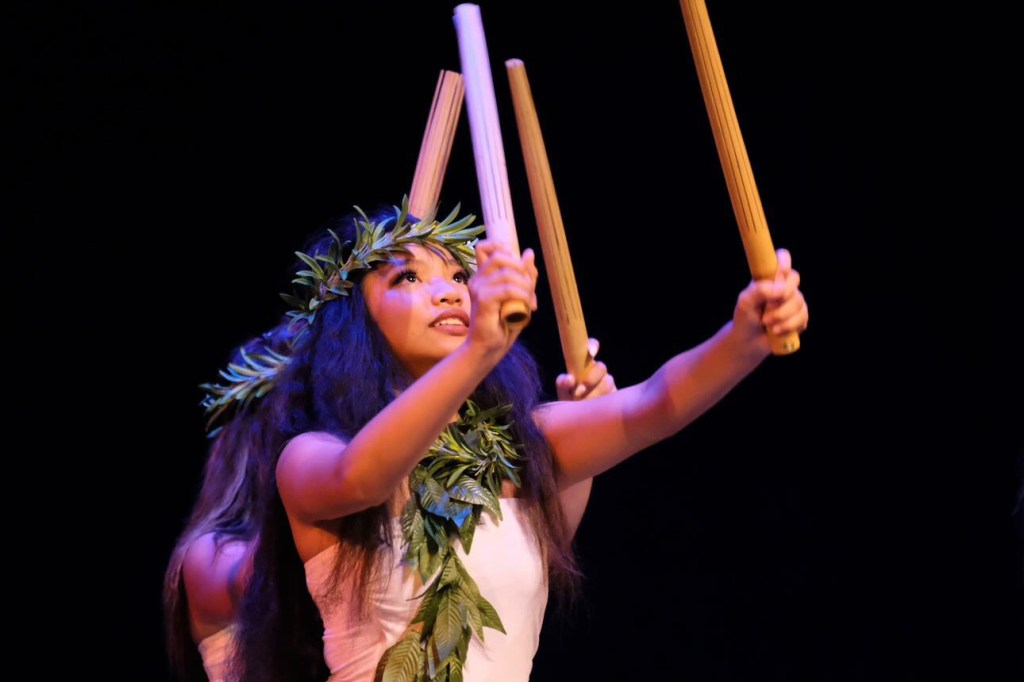
Hula dancing, rooted in Hawaiian culture, relays ancestral stories through oli (chant) and mele (song). The two main styles are Hula Kahiko and Hula ‘Auana, each of which holds distinct cultural roles. Kahiko is the more traditional with percussion instruments alongside pa`u skirts, crafted from leaves and other plants. Meanwhile, ‘Auana is a modernized style of hula, using Western string instruments and mele in addition to more modest versions of traditional garments.
In both styles, dancers wear leis (garlands) and kupe`e (bracelets of anklets made from plants, shells or other natural materials). Each element of hula is intentional, chosen to complement the dance and emphasizes the meaning in their fluid steps and gestures.
“Hula became my safe space,” freshman Chila Lopez said. “I primarily used it as a cathartic release, a way to clear my mind; but hula has also brought me friends, if not another family.”
As a part of the many meaningful dances that exist across cultures, belly dancing, often called raqs sharqi, has this cultural feeling that’s more than just a dance.
Originating in ancient Egypt and other Middle Eastern and North African cultures, it spread through everyday moments, family celebrations, women dancing together, and communities using movement to share joy. With fluid hips, soft isolations, and expressive arms, the dance tells stories that words often can’t.
“To me, belly dancing is a way of connecting to my Arab heritage. Senior Natalia Irby added “Since I don’t know the language, belly dancing has always been my way of embracing my Jordanian side.”
Across numerous cultures, dance is one of the many creative ways utilized to preserve ancestral stories and traditions through time for future generations. The vast but beautiful contrasts symbolize diversity, while enabling meaningful connections between individuals, their heritage and their identity.