By Cooper Hofmann
Once, I had to take photos for an article on the popular culinary program. I walked in, and was hit with the scent of sweet sugar and confections. They had a moist chocolate cake dripping with ganache in one pan, and were in the process of placing an overflowing tray of cinnamon-scented apple turnovers into the roaring oven. I took some photos while holding a generous plate of the delicious, rich cake, completely awestruck.
Just when I was about to leave, satisfied with my pictures, culinary teacher Daniel Ma boomed to the class, “ice cream time,” while hefting an industrial sized tub of ice cream up onto the main table. Every student just lined up like it was clockwork, like every day was ice cream day..
That was the day I learned that culinary class is either not real, and a gas leak caused me to hallucinate the academic equivalent of walking into Willy Wonka’s Chocolate Factory or the true happiest place on Earth.
The two-year course flows from an introductory first year, then moves into the advanced culinary class. The first-year course offers a broad education on food and how to make it, involving a comprehensive education on nutrition via the use of assignments on the website Rouxbe.
In the advanced culinary course, students’ knowledge and skills are tested in more complex ways.
“Introductory to Culinary is a lot more structured,” senior Pablo Guardado said. “You work Monday and Tuesday, then prep on Wednesday, demo on Thursday, and finally prepare on Friday. But Advanced Culinary is two hours long, so you get a lot more freedom.”
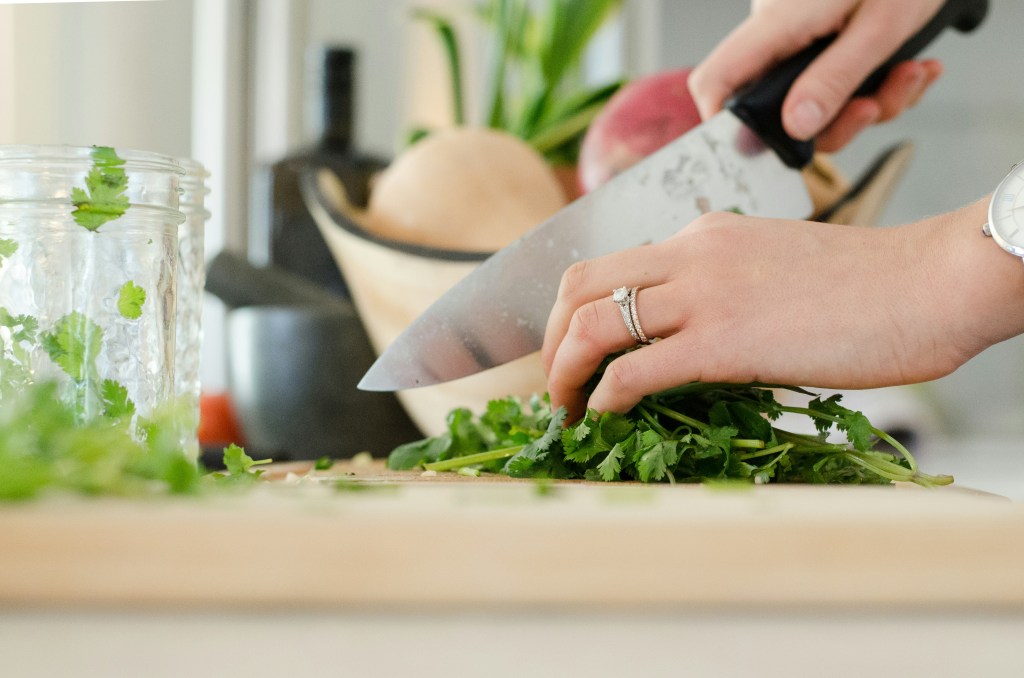
What makes the culinary program so unique is how much respect it gives its students. The freeform environment that Chef Ma creates is admirable, considering that all of the students in the classroom wield a variety of knives.
“Chef Ma trusts us a lot,” junior Lizeth Barcanes said. “We learn so much about food and preparation. It’s really freeing to walk into a classroom and feel respected. We’re treated like adults in the culinary field.”
Culinary also does a lot in preparing you for adulthood. Most preparation programs are for Science, Technology, Engineering, and Mathematics (STEM), or for trades such as auto tech. The culinary program, however, opts for a more personalized approach, teaching students how to make meals at home as well.
“My favorite dish was oyakodan, because it wasn’t even an assignment.” Guarardo said, “Chef Ma just saw that I was sort of hangry, and asked me if I wanted to make something new.”
Culinary gives students a special connection with food and each other, which moves beyond just wanting a grade or a certification. The program truly fosters a passion for cooking.
Naturally, keen-eyed companies notice these opportunities, as members of advanced culinary are given food handling certifications and allowed to cook for actual, live events. Senior Sasha Lester, for example, was delighted to be in the presence of Sublime at one of these events, so take from that what you will, but there’s a nonzero chance that you’ll meet famous people.
It would be remarkably easy for GHC to set up a “nutrition” class, or shoehorn in some cheap mandatory course done on your chromebook. Instead, Chef Ma and staff went out of their way to create a uniquely hands-on experience that sets students up for a career in the food industry.
Dozens of GHC’s very own set of Master Chefs step into G6 every day, make meals that leave me wishing I had been born with a different passion.