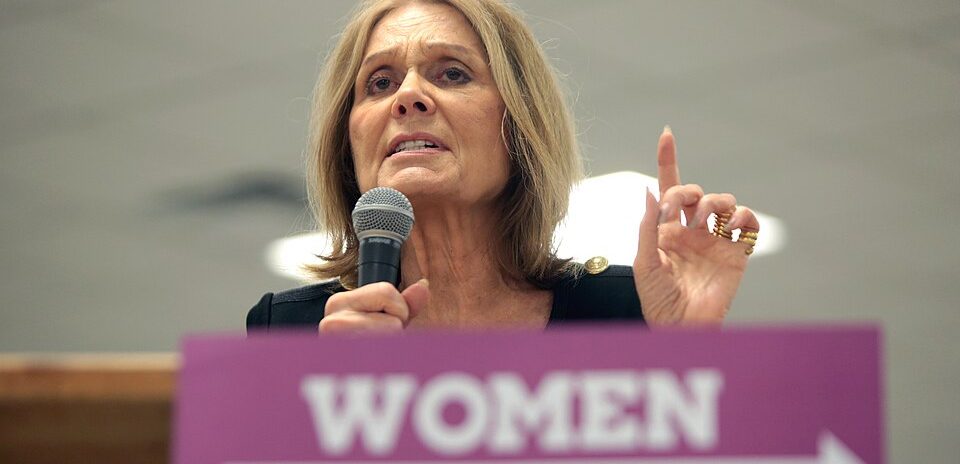
Gloria Steinem spent much of her life listening to women whose experiences had been dismissed or kept private. Then she found ways to bring those stories into public view.
American journalist, social movement activist, and feminist, Steinem passed away on September 2 at the age of 92. She was widely known for leading the second wave of feminism in the United States in the 1960s. Yet the work that brought her attention began with a simple question: What would happen if a reporter looked past the glamorous image of the Playboy Club and listened to the women working there?
In 1963, Steinem went undercover as a Playboy Bunny in New York City. For 11 days, she experienced the job’s demands firsthand along with other Bunnies who worked as waitresses, photographers, and casino dealers, and gave performances. She went into the assignment undercover to expose the harsh working conditions that women faced. The assignment showed the approach she returned to throughout her career: taking women’s everyday experiences seriously enough to investigate and publish them.
Steinem wanted more than one article, however. In 1971, she helped launch Ms. as a sample insert in New York Magazine. The first female owned and operated women’s magazine ran its first regular issue in 1972. At a time when women’s magazines focused on homemaking, fashion, and beauty, Ms. made sure that issues such as abortion, domestic violence, and equality were unavoidable. Steinem helped create the kind of publication she had wanted to read herself.
“I feel even I and lots of other women are very isolated from each other,” Steinem said in an interview for Ms. “So we need a magazine that’s a kind of conscious–raising group in itself, a friend, you know, that comes into your house and is something that really tells the truth about your life.”
She also took her work beyond the page. Steinem had dedicated her life to fighting and advocating for women’s rights as she led marches and continued to support gender equality. Her actions had led to the establishment of the Women’s Action Alliance, a prominent U.S. feminist organization that provided grassroot resources, communication support, and project coordination to advance the women’s movement. She firmly believed that you had to meet people in person.
“You have to be there with all five senses,” Steinem told the Associated Press in 2015.
Steinem wrote books, helped build organizations, and received the Presidential Medal of Freedom in 2013. Those achievements tell part of her story. The stronger thread through her life, however, is what she did with her platform. She noticed experiences that others overlooked. She helped women speak about them and made sure female voices were heard.
Today, we continue to uphold her legacy and bring issues of gender inequality and lack of political representation to the table.