By Julian Bayan
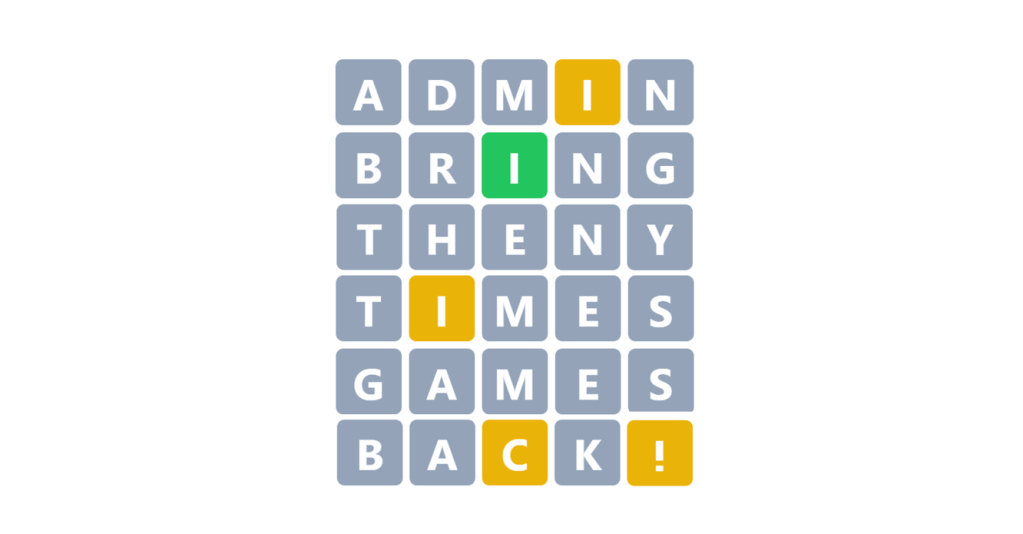
When The New York Times obtained “Wordle,” an engaging word guessing game, in January 2022, it swiftly became a viral sensation. Players worldwide would share their stats with one another and on social media, boosting its popularity even further. Even Granada Hills Charter (GHC) students got in on the game, often playing on their Chromebooks.
Wordle captivated students by letting them have their daily victory moment by successfully figuring out the daily 5-letter word puzzle. The Worlde word is the same for every player. Even though a part of the appeal is the intellectual challenge, a large part of Wordle’s popularity comes from trying to outdo your friends and family so that you can feel superior. Even though it is an individual word game, by sharing scores, Wordle is also a competitive game. Whether we get the word in fewer guesses than our peers or are frustrated with not guessing in the six allotted guesses, this spurs us to keep playing.
This was a friendly competition among students that was centered around vocabulary and critical thinking. You would often hear classmates helping each other or teasing each other as they played.
Recently, however, the school restricted Wordle and all New York Times games, which is uncalled for as they are educational games focused on words and numbers.
Although some could argue that the game is distracting, especially if students are playing it during class time, the benefits of the game outweigh its perceived drawbacks. Wordle is stimulating for the mind. In a tiny package of five-letter words, Wordle can help students develop problem-solving skills, improve their attention span, and even boost their memories and vocabulary retention.
Wordle is also a quick brain test, as most people spend mere minutes playing the singular match per day. Players must move on with their day regardless of whether they correctly guessed the word because there is no game until midnight the next day.
By limiting Wordle to once a day, it is a much shorter game than the unblocked games students are finding anyway. This day-long wait between games highlights how Wordle does not pose a significant distraction to students.
Instead of blocking Wordle, the school should have embraced the students’ interest in vocabulary games. Maybe they could have dedicated a few minutes of homeroom to encourage students to play before class started. They could have made it a school-wide initiative to emphasize critical thinking skills by challenging players to exercise problem-solving skills.
Since Wordle was not a significant distraction or problem to begin with, blocking access to the game will not suddenly make everyone who previously played the game more productive. Students will still manage to find other forms of distraction during instructional time, both in and outside of the Chromebook. Now, those distractions will just be less beneficial.