Strip away the heavy velvet capes, the crumbling Austrian castles, and the 19th-century vocabulary, and Joseph Sheridan Le Fanu’s 1872 novella “Carmilla” stops looking like an ancient piece of classic literature and instead reads like a modern high school diary.
Long before Bram Stoker’s “Dracula” codified the vampire genre, “Carmilla” established the blueprint for modern horror. But, the book’s true genius does not lie in its supernatural lore.
It lies in its shockingly accurate depiction of the teenage girl experience proving that intense emotional landscapes, suffocating isolation, and patronizing adults that define youth have not changed in over a century and a half.
The story begins with Laura, a lonely teenager trapped in a remote estate with no one her own age to talk to. Her world is small, quiet, and deeply isolated.
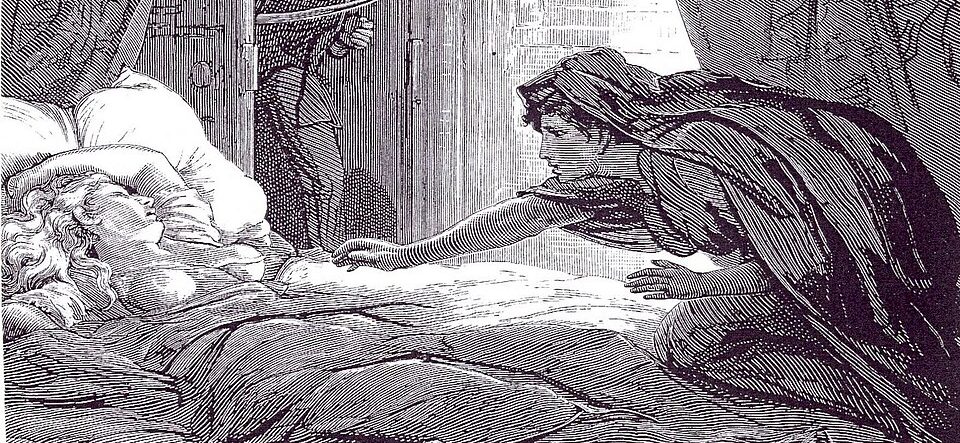
Enter Carmilla, a mysterious girl, secretly a vampire, who arrives after a sudden carriage accident. Instantly, Laura’s monotonous life explodes into a wide range of colors.
Laura and Carmilla form a bond that is fiercely protective, secretive, and consuming.
It is the type of relationship where another person becomes the center of your universe, and any modern teenager who has ever found that “one best friend” will immediately recognize this dynamic.
They whisper secrets in the dark, obsess over each other’s thoughts, and lock out the rest of the world. Le Fanu perfectly mirrors the consuming nature of teenage attachment, illustrating how an intimate bond can easily morph from a simple friendship into a desperate lifeline.
As the weeks progress, Laura begins suffering from vivid and exhausting nightmares along with a draining illness. She tries to communicate her terror, but she runs into a wall that every generation of teenage girls knows, and that is the adults around her refuse to listen.
Instead of taking her physical and mental decline seriously, the older men in the castle dismiss her symptoms as if she is suffering a childish phase of “female hysteria,” or even more familiar, simple teenage drama.
This is where “Carmilla” transitions from a supernatural vampire story into a psychological horror. The true terror is not just the monster outside of the window, it is the agonizing frustration of having your problems be dismissed by the authority figures who claim to know “what is best for you.”
Pop culture often treats the anxieties of today’s teenage girls as a shallow byproduct of internet culture. However, “Carmilla” utterly shatters that assumption.
The novella is a brilliant and quick-read that provides an immediate atmosphere for the Halloween season. But more importantly, the novella proves that the messy and passionately intense internal world of a young woman is not just a modern trend.
It has always been right here, haunting the shadows of history hidden behind “female hysteria”
Modern media is still trying to decode the teenage gaze but it completely forgets that a Victorian novella solved that puzzle in 1872. The enduring power of “Carmilla” lies in the simple truth, the internal world of a teenager is terrifyingly complex all on its own.
Long before anyone learned to commodify adolescent angst, two Victorian-era teenagers were already validating it.