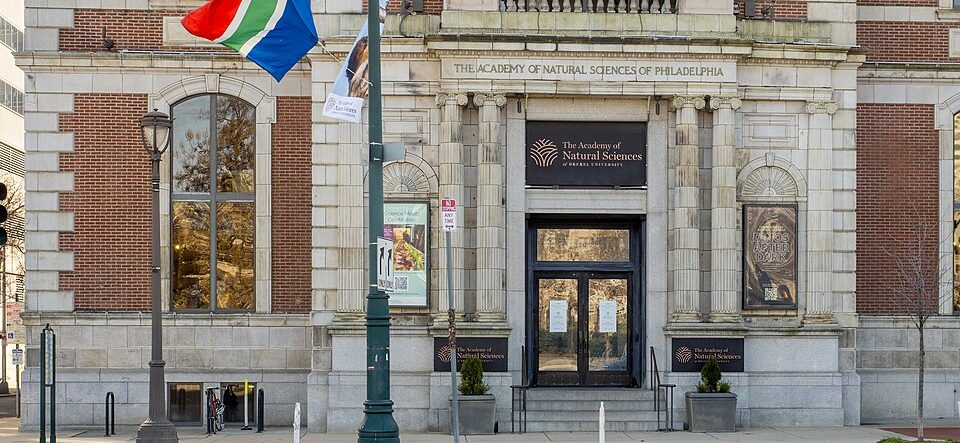
September 27 of 2026 was the last day that the largest and most important natural sciences museum in the Americas was open to the public. Once an important conservatory for research and education, the gems of Earth’s history that it so preciously holds will be hidden away again. But this is just an example of our society’s lust for profit.
Founded in 1812, the Academy of Natural Sciences is the oldest institution of natural history in America, contributing to biology, ecology, and environmental fields. It is not just a building that shows the breathtaking world that existed before mankind, but also a testament to human discovery. This monument holds over 73,000 specimens, making it vital for our understanding of the earth.
It was not just every little child’s fascination, it was how we kept moving forward in science.
Yet, at the beginning of September, Drexel University, an affiliate of the museum, announced with regret that the academy was closing because of rising financial costs and irregular visitations.
“Over time, it became clear that these were not temporary pressures,” says Drexel’s official statement. “[they were] fundamental changes in the economics of the Academy’s operational model, costs that have imperiled the Academy’s ability to discharge its overall mission and preserve its legacy.” In other words, “we can not afford to keep this museum going.”
This statement is upsetting, but it makes sense. While science and culture is important to us, it can be equally expensive to continue protecting them. According to MSNBC, management costs for the museum were about 23.8 million dollars just in 2024 alone. The money takes a toll.
The William Penn foundation offered a fund of about 28 million to buy time to think of a permanent solution. However, Drexel denies this offer.
Drexel University says that financial troubles make it difficult for the building to “preserve its legacy,” and on its official website, it states that the building will “remain in operation.” Somehow, they are simultaneously trying to sell it down the road for the biggest and fastest buck it can make. According to the Philadelphia Inquirer, the museum’s property value is about 28.7 million dollars. Given that Drexel University approves the sale or lease of the property, it is clear how zoning the museum for the construction of multi-family apartments is enticing.
To Drexel University, it seems that cultural legacy is indistinguishable from commercial profit.
City councilmember Jeffery Young has introduced a bill that limits commercial and residential zoning for this building in an effort to preserve its cultural heritage. Moreover, a hearing to investigate the museum’s finances has been called and rescheduled for October 26th, hoping to provide more clarity in this situation.
Still, concerns persist. If there are discrepancies in this matter of the closing, what else are we being lied to about? What will happen to the thousands of specimens that are crucial for life-changing research? Even more imminently, if we keep accepting profit as a worthy replacement for culture, what will this mean for our future?
Far too long have we let go of powerful aspects of our culture that have defined who we are. The moment we lose sight of what truly matters, we stray away from the little kids who are obsessed with dinosaurs into a mindless, soulless society.
Imagine the dangerous precedent we are setting to the children of this generation: the present matters more than the future and infinitely more than the past. No matter what it is, profit matters more than impact.
The protestors on the grounds of the museum care about the legacy of the academy, and we can’t allow anyone to forfeit it. There needs to be a turning point for our sales-based drive, and this is it.